

Sleeping Pad R-value Explained: The Guide for a Warm Night Wilderness Camping
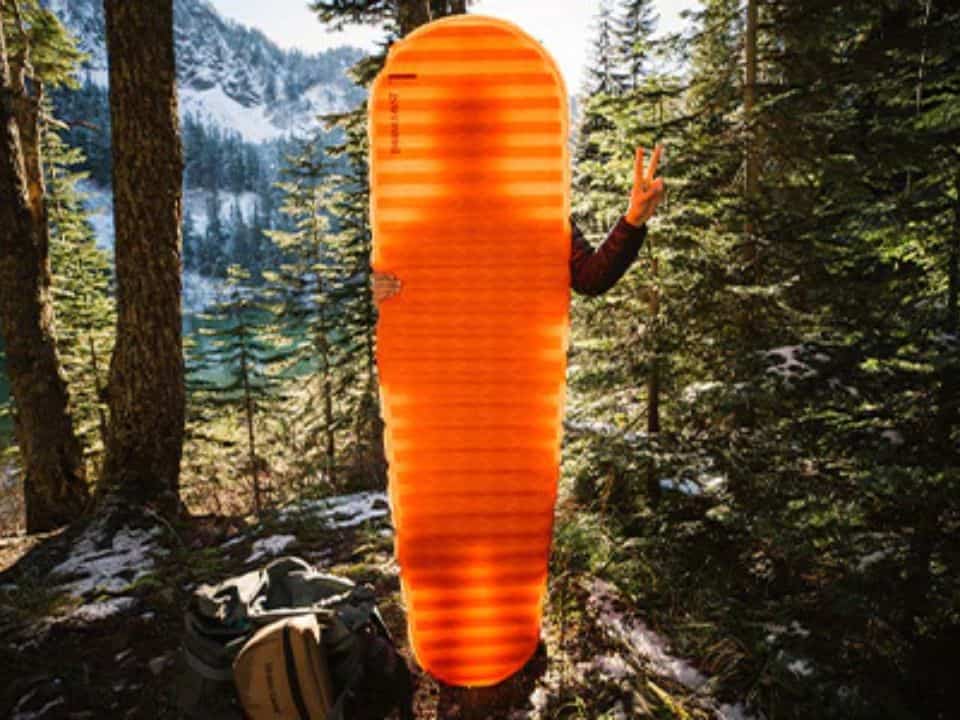
Whether you call it a sleeping pad or a sleeping mat, this bit of kit does far more than turn lumpy ground into something tolerable. It’s the barrier that slows your body heat from sinking into the earth, which is why the ground can feel cold beneath you. If you’ve ever felt toasty in your bag yet chilled from below, you’ve already found the weak link. It all comes down to sleeping pad R-value.
Understanding R-value helps you get the warmth you need without carrying more than you have to. Your sleeping pad is the foundation of a warm sleep system, not an afterthought.
In this guide I explain how pads keep you warm in plain terms, what R-value means and how to use it, and the ranges that make sense for summer, shoulder season, and winter. We will look at the main types of pads, how to stack insulation when conditions turn colder, and how to choose a size and build that suit the way you actually sleep. I will also cover care and setup, including simple habits that make a real difference, such as using a pump sack to keep moisture out of insulated air pads and checking inflation after you lie down.
Some inflatable pads are noisy. we'll take a look at why that happens, which designs tend to be quieter, and a few easy ways to reduce the crinkle. By the end you will know how to match a sleeping pad or sleeping mat to your route, your season, and your own metabolism, so you can settle in at night and stay warm until morning.
Common first-night mistake: buying a warm sleeping bag, then pairing it with a thin, low R-value pad. The result is a shivering cold night – even if you have the perfect sleeping bag.
This article may contain affiliate links. If you make a purchase using one of these links, we may receive compensation at no extra cost to you. See our Disclosure Policy for more information.
Why the Ground Feels Cold
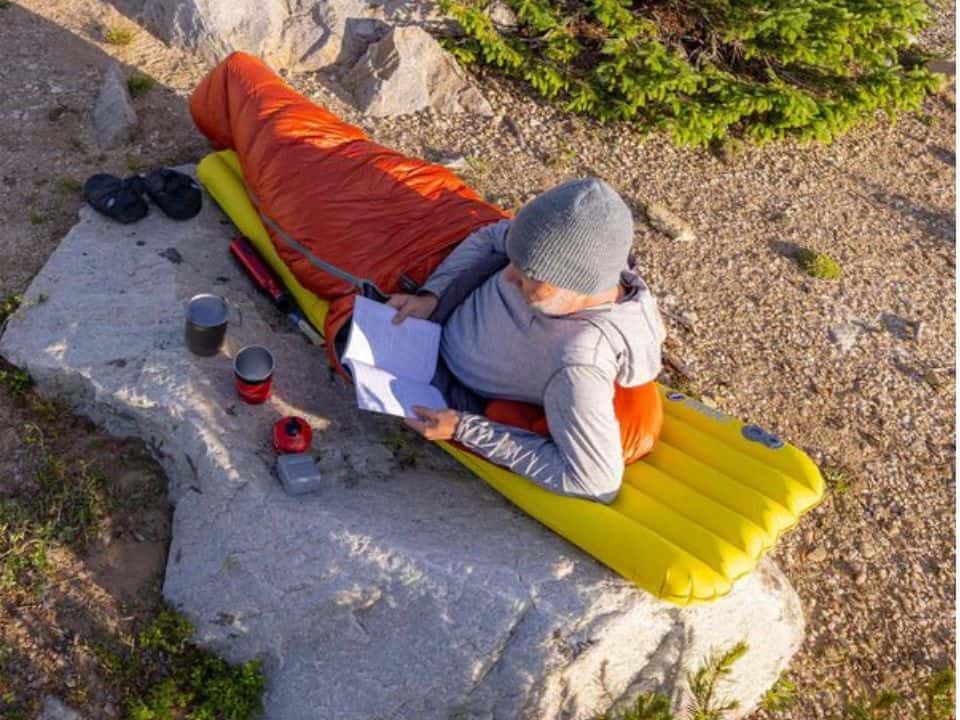
Your sleeping pad (or sleeping mat) is the under-body insulation in your sleep system, while your bag or quilt looks after the top. Heat always moves from warm to cool until things even out. And this is just a basic physics rule, just like gravity. It's called Conduction.
Your skin sits roughly around the mid-30s °C (about 93–95 °F), while the ground is usually much cooler. Without proper insulation your body keeps feeding the earth heat all night. And that's why your pad or mat needs to create a stable layer that slows that transfer so your bag or quilt can do its job.
Next I’ll show how the ground steals your heat, then we’ll use sleeping pad R-value to choose the right level of under-body insulation for your season and route. All you need to do is control the heat flow into the ground and the rest of the sleep system can do its job.
How the Ground Steals Heat
When you lie down out there, there are 3 main things that determine how quickly the ground starts to sap your warmth. Let's take a look at them
1) Temperature difference
A bigger gap between your body temperature and the ground means a stronger drive for heat to leave you. And even a small difference will cool you through the night. Also, the ground cools as the night goes on, which is why you may feel coldest just before sunrise.
2) Thermal conductivity of the ground
What you lie on really does matter. Wet soil, rock and hard-packed ground pull heat away much faster than dry, springy turf. And this is why camping near a river can feel quite cold (although nothing can beat the sound!). It's the water beneath the ground which is causing the cold throughout the night.


Air is a poor conductor of heat, compared to soil, rock and water. And this is the reason why foams and insulated air pads work well. They trap still air and slow the flow of heat.
3) Thickness and construction of your pad
More thickness and effective insulation trap more still air and slow heat loss. So your pad needs to be either thick or effective. And effective needs to be in the form of insulation and/or control of air movement inside the pad chambers. Also, you may “bottom out” at your hips or shoulders which reduces effective insulation.
This is where insulated air pads come into the spotlight. Insulated pads are not necessarily thick, but baffles and internal fibres or reflective films limit internal circulation and reduce convective heat loss. This is all part of what contributes to the pad’s R-value.
What is R-Value?
R-value is a number that tells you how well a pad or mat resists heat flow into the ground by conduction. Simply put, a higher R-value means a warmer pad.
What it is not. R-value is not a temperature rating. There is no single, reliable conversion from R-value to degrees. Real-world warmth depends on your site, the weather, your sleep clothes and covering, and how you use the pad.
Comparability. Many brands use a consistent laboratory method so you can compare R-values across models. You need to treat the number as a solid guide, then choose a range that matches your conditions.
How the lab test works. Many brands use the ASTM method: the pad sits between a heated plate and a cooled plate, and the machine measures heat flow to calculate R-value. Be aware that some budget pads publish untested or non-ASTM figures (or just “season” icons). If a spec doesn’t say “ASTM R-value,” treat it as a rough claim rather than a comparable number.
Stacking pads. R-values add together. If you put a thin foam pad with R 1.5 under an insulated air pad with R 3.0, you get roughly R 4.5 in total. Order does not matter much for conduction, but it is sensible to put the more puncture-resistant layer on the ground.

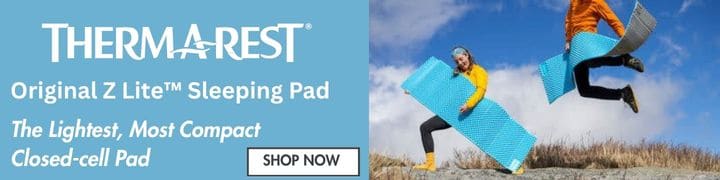
Reflectix and sun-shades. Reflective bubble-wrap or car windscreen sun-shades add very little R-value when sandwiched flat with no air gap. They can help with puncture protection and give a small boost under feet, but they may trap moisture. For a reliable increase, use a thin closed-cell foam pad with a known R-value such as the Therm-a-Rest Z Lite Sol Sleeping Pad with an R-value of 2.
Practical ranges to plan around
Use these as starting points and adjust for your climate and how warm or cool you sleep.
- R 2.0–3.0 for mild summer nights on dry, sheltered ground.
- R 3.0–4.5 for typical three-season trips with mixed weather.
- R 4.5–5.5 for colder shoulder seasons or higher, more exposed routes.
- R 5.5–7.0+ for winter on frozen ground or snow, often stacked with a thin foam pad.
If you sleep cool, expect wet ground, or camp on exposed sites, choose the warmer end of the range.

Types of Sleeping Pads and Mats
Closed-Cell Foam (CCF)
A classic foam roll or folding pad.
Strengths: simple, reliable, cannot leak, works on wet or abrasive ground, useful as a backup under an inflatable, good value, adds R when stacked.
Trade-offs: bulkier, less cushioned, can be slippery on slick tent floors.
Best for: backup insulation, ultralight minimalists, very rough ground, winter stacking.
Recommended: Therm-a-Rest Z Lite Sol Sleeping Pad
Insulated Air Pad / Inflatable Sleeping Pad
An air-filled pad that uses baffles, fibres, foam or reflective films for insulation.
Strengths: excellent comfort-to-weight, compact packed size, wide warmth range including true winter models (ASTM R ~5.5 to 8.5).
Trade-offs: vulnerable to puncture; some models are noisy (see “Noisy air pads”); warmth drops if you bottom out or if the pad slowly deflates overnight.
Best for: three-season through winter when you choose a high-R model; hikers who want high comfort at low weight.
Recommended: Exped Ultra Range


Self-Inflating Pad
A foam-filled airtight pad that partially fills itself as the foam expands.
Strengths: very stable feel, durable, easier field repair than some ultralight inflatables, warmer at a given thickness than plain air.
Trade-offs: heavier and bulkier than air pads of similar warmth, slower to pack, can take on moisture if the valve is left open in damp environments.
Best for: comfort-first hikers, bikepacking, and those who camp often on rocky or uneven pitches.
Recommended: Sea to Summit Pursuit Plus Sleeping Pad

Don’t Gatekeep the Good Stuff.
If you know someone else who'd like this, spread the word!
Choosing the Right Pad or Mat
Match the season and route.
Pick an R-value for the coldest nights you’re likely to meet, not the average forecast. River terraces, peat bogs and valley bottoms hold cold and damp, while slight rises and dry, springy turf feel warmer. And then above ground, exposed moorland and high passes cool quickly after sunset.
If you know you sleep on the cool side, choose the warmer end of the range or take an underlay such as the 1/8″ Thinlight Foam Pad by Gossamer Gear or the Therm-a-Rest Z Lite Sol Sleeping Pad.
Consider your body and sleep style.
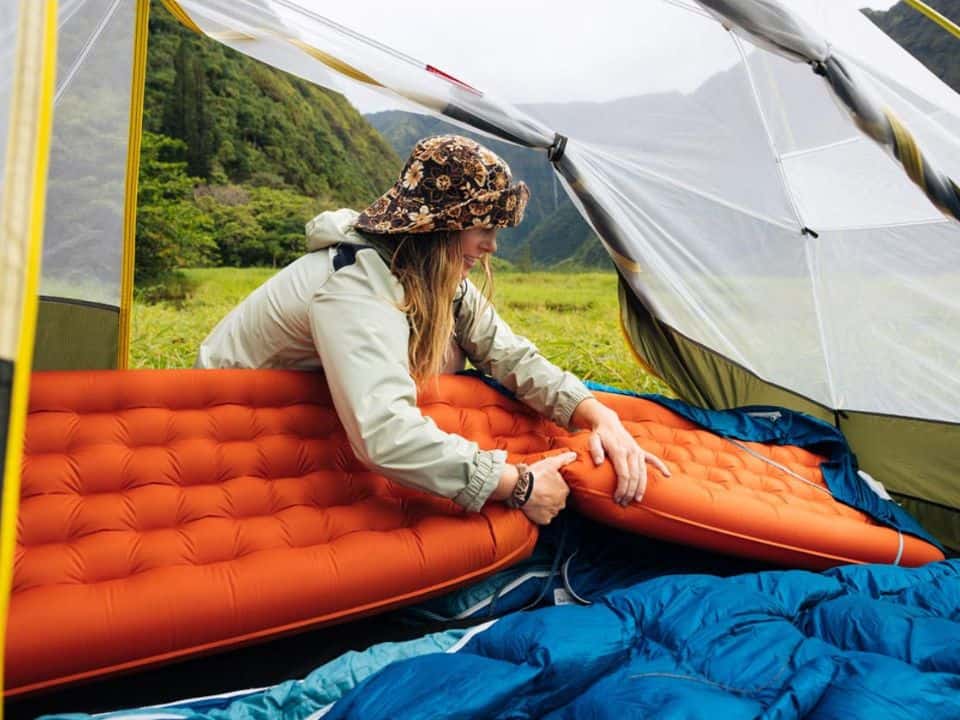
Side sleepers and broader shoulders often do better on wider mats. A standard pad is often around 51 cm (20 in), while wider options are 58–64 cm (23–25 in). Many manufacturers also cater for taller people and offer additional sizes accordingly. If you’re shorter, a 3/4 length pad can save weight, however you may like to add a small foam piece under your calves and feet.
Thickness influences comfort too: many inflatable pads in the 7–9 cm range feel kinder to hips and shoulders, while self-inflating pads are usually thinner but feel more stable. Rectangular pads usually keep more width through the lower body. Mummy pads typically taper at the legs and feet to cut weight. This is usually purely a matter of personal preference.
Balance weight, durability and comfort.
It goes without saying, but thin fabrics = less abrasion resistance. Many lightweight inflatables use very lightweight fabrics (e.g., 7–20D nylon/poly with a TPU film). And these fabrics tend to scuff and puncture more easily on rough surfaces than heavier weaves. Rock crystals/edges, gritty sand, woody heather stems, and thorny scrub (gorse/bramble) can create pinholes or scuffs as you shift your weight at night, especially if you are cowboy camping.
If you're in your tent, a ground sheet (foot print) under your tent floor will not only protect your tent, but also your sleeping pad. And this does not have to be an expensive brand footprint, a simple groundsheet using Polycro or Tyvek will suffice. And again, a thin closed-cell foam underlay adds puncture protection, and it doubles as an emergency backup if something goes wrong.
Noise Tolerance
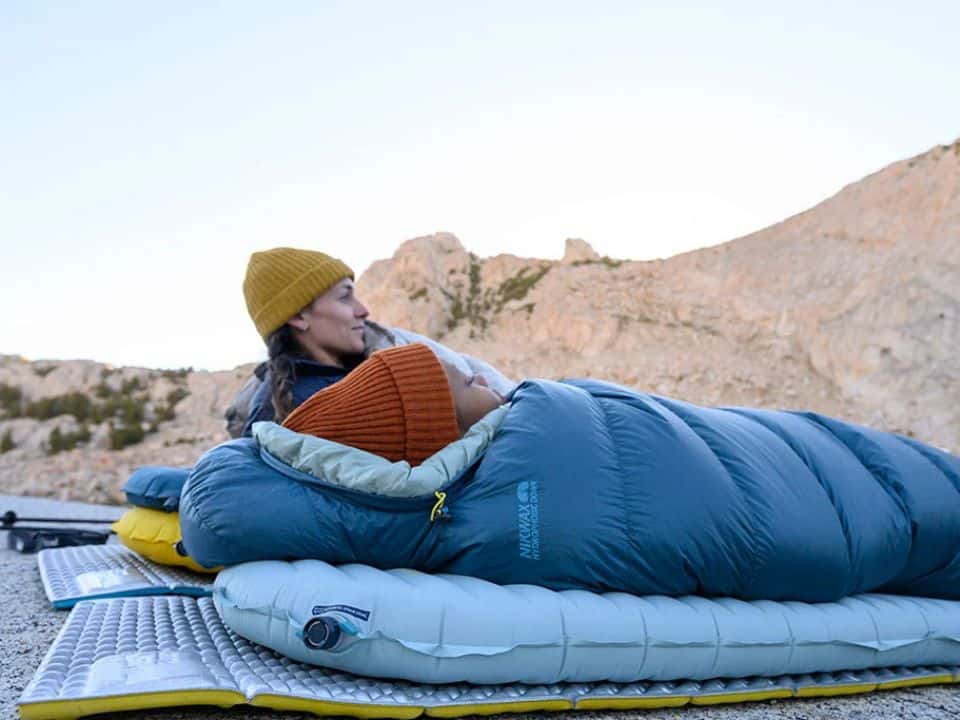
Some insulated air pads rustle more than others. The sound usually comes from internal reflective films or stiffer shell fabrics. If you’re sensitive to noise or you share a tent, check reviews or try one in person. There are plenty of quiet models now and some brands like Therm-a-Rest, have improved their NeoAir® XLite™ NXT noise range up to 83% from earlier versions. Also good to note, self-inflating pads are generally quieter. A good source for feedback is the Ultralight Backpacking Facebook group, an extremely active and passionate group, always ready to put their two cents worth in.
Put your Money Under You
If you’re deciding where to spend, prioritise under-body insulation first. A mid-range sleeping bag on quilt on a higher-R pad often feels warmer than a premium bag or quilt on a mat with a lower R-value. Borrow or hire before you buy if you can, and upgrade in steps: pad first, then fine-tune bag or quilt once you know your typical nights and sites.


Repairs and backup. Carry a tiny patch kit. A thin foam sit-pad doubles as a warmer seat and emergency torso insulation if your inflatable fails.
Storage. For self-inflating pads, store unrolled with the valve open if space allows. For air pads, store loosely rather than tightly compressed. Avoid long-term heat and UV exposure.
How to Keep Your Pad Working Trip After Trip
Inflation Level
Your pad doesn’t need to be rock-hard, but it does need to keep your hips and shoulders off the ground. Inflate it fully to begin with, then lie down and see how it feels. As the air cools at night, the pad can soften a little, so it’s worth giving it a quick top-up before you settle in.
Keep Moisture Out
Moisture inside your pad doesn’t just affect warmth, it can also lead to mould, mildew, and damage over time. When you inflate a pad with your breath, you’re sending warm, humid air straight into the chambers. In cold conditions that moisture can freeze, and in warmer climates it can cling to the internal surfaces and gradually break down materials or insulation.
Even a little bit of internal moisture can reduce the pad’s ability to resist heat loss, especially in insulated air mats that rely on reflective films or synthetic fill to slow conduction.
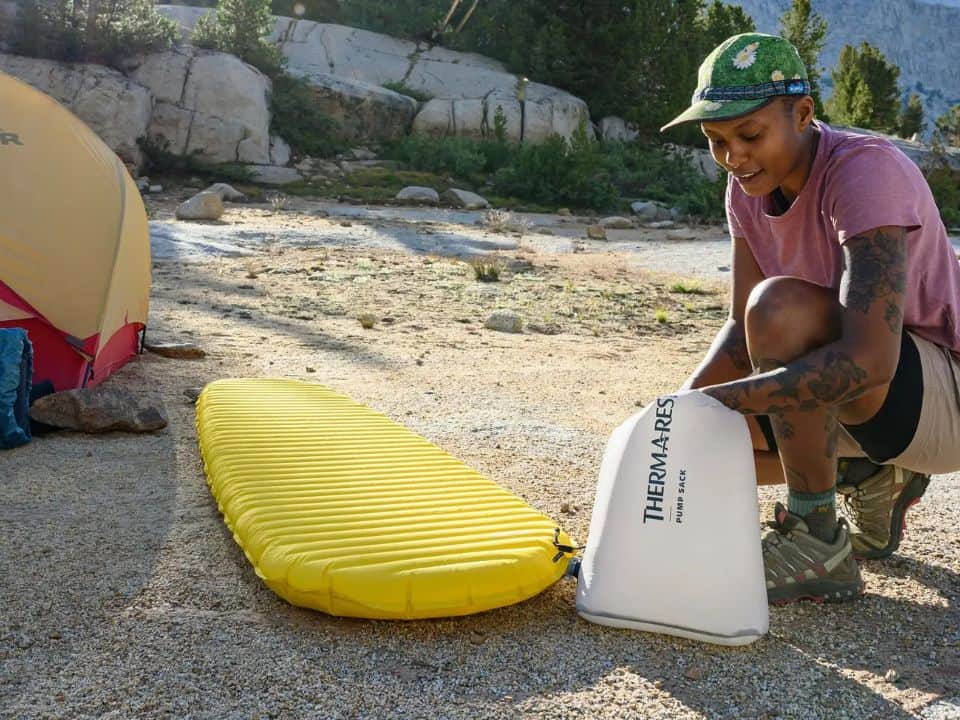
That’s why most quality brands, like Therm-a-Rest and Exped, include a pump sack with their pads. These lightweight air bags let you fill your mat without breathing into it, and they’re surprisingly quick. Some hikers use a small battery-powered pump for the same reason. It’s a simple way to protect your pad and not just about making setup easier.
After your trip, open the valve and let your pad air out somewhere dry, especially if you have inflated it by mouth. You will not always know if there is moisture trapped inside, but airing it out helps prevent mould and keeps the insulation performing properly.
Repairs and backup
Most reputable brands include a repair kit with the mat, and you can often find it tucked into a little pocket inside the stuff sack. It’s worth checking it's there before each trip. If your pad didn’t come with one, a small strip of Tenacious Tape is a good all-rounder to carry. You should have some on your utility kit anyway. – just saying.
If you’re trying to find the leak, start by listening or feeling for air. A few drops of soapy water can help if you have some, and you can watch for bubbles forming at the puncture.
This is where your thin closed-cell foam sit-pad come in handy. Not only as a sit pad during breaks, but more importantly, it doubles as emergency torso insulation if an inflatable fails.


Storage
How you store your pad between trips affects how well it holds up. If you have the space, self-inflating pads are best stored unrolled with the valve open. This helps the foam keep its loft and allows any moisture to escape.
Air pads can be rolled or folded, depending on the design, but avoid storing them tightly compressed for long periods. Constant pressure can weaken baffles and welds, especially at fold lines. Looser storage helps the fabric and seams stay in good shape.
And make sure you keep all pads somewhere dry and out of direct heat or sunlight. So not in a damp garage or next to a boiler. It's is also worth checking the valve occasionally to make sure it hasn't seized up.

Pack Light, Pack Right. Free Multi-Day Hiking Packing List
Plan methodically and keep track of every essential for your next multi-day hike. Add notes and quantities, save or print your list, and share it with hiking partners so everyone knows what’s covered. Works on any device.
Clean and Gentle
Pads don’t need much cleaning, but it’s worth doing now and then — especially if you’ve been on sandy ground or muddy sites. Wipe them down with lukewarm water and a mild soap, then rinse well and let them dry fully before storing.
Skip anything harsh like strong detergents, solvents, or hot water. These can damage the coatings, seals, or films and shorten the life of the pad.
Sleeping Bags, Quilts, and the Pad: Teamwork
Your sleep system only works if all the parts are doing their job. Insulation works by trapping air, and that’s what keeps you warm. But when you lie on a sleeping bag, the fill underneath your body gets flattened. Once it is compressed, it stops working as insulation. That is where your pad comes in. It creates the barrier between you and the ground, and it slows the steady loss of heat from below.
Many modern sleeping bags are designed with this in mind. Some reduce or even remove the insulation underneath to save weight. The idea is that your pad should be doing the work on the bottom, not the sleeping bag.


Quilts take this further by removing the underside entirely. They are lighter than full bags and give you more freedom to move. They all come with pad straps to help seal out cold air, but not everyone uses them all the time. On calm nights, and with the right pad, you may not need the straps at all.
Choose your bag or quilt temperature rating based on how you sleep and the coldest conditions you are likely to face. If you start to feel hot, vent early. Sweating inside a bag or quilt increases evaporative heat loss, and can make you colder later. Over time, that moisture can also reduce loft, especially in down.
When the Pad Does Its Job, Everything Else Works
Thanks for reading. Sleeping warm isn’t just about your bag or quilt, it’s about understanding what’s happening underneath you. Whether you're packing light or prepping for cold ground, the right pad can make all the difference. I hope this guide helped you choose something that keeps you comfortable out there, night after night.
Happy Hiking!

Sharing Is Caring
Pass this on to someone who’ll be glad you did.
Frequently Asked Questions
What is R-rating?
R-rating is just another way people refer to R-value. They both mean the same thing — how well a pad resists heat transfer to the ground. Most outdoor brands use the term “R-value,” especially when it’s tested to ASTM standards. If you see “R-rating,” it’s likely just informal wording.
What is R-value?
R-value is a number that tells you how well a sleeping pad resists heat loss to the ground. The higher the R-value, the better the insulation. It’s not a temperature rating but a guide to how well the pad slows conduction. Choose the right R-value based on your season and route.
What R-value sleeping pad do I need for summer?
For mild summer nights, an R-value between 2.0 and 3.0 is usually enough. If you're camping on damp ground, near rivers, or tend to sleep cold, go for something closer to 3.0. Keep in mind that even summer nights can feel chilly from below without proper under-body insulation.
Is R-value the same as a temperature rating?
No, R-value is not a temperature rating. It measures how well a pad resists heat loss to the ground. Temperature comfort depends on your pad, sleeping bag or quilt, what you wear to bed, and the conditions at your campsite. Use R-value ranges as a guide, not a precise temperature scale.
Can I use a sleeping pad without an R-value?
Some cheap pads don’t list R-values or use icons instead. If it’s not tested to ASTM standards, take the claimed rating with caution. For safety and warmth, it’s best to use pads with a known R-value, especially in cold conditions where underestimating insulation can mean a very cold night.
Do I need a sleeping pad if I have a good sleeping bag?
Yes. Your sleeping bag doesn’t work underneath you because the insulation gets compressed and loses loft. That’s why you need a pad. The pad does the job of stopping heat loss to the ground. Without it, even the best sleeping bag can feel freezing from below.
Can I stack sleeping pads to increase warmth?
Yes, R-values add together. A foam pad with R 1.5 under an air pad with R 3.5 gives you around R 5.0. This is a common winter setup. Just make sure the more puncture-resistant layer goes on the ground. Stacking also protects the inflatable pad and adds comfort on rough ground.
Can I use a yoga mat instead of a sleeping pad?
No. Yoga mats are not designed for insulation and have almost no R-value. You’ll lose body heat quickly, especially on cool or damp ground. Even the cheapest closed-cell foam pad is a better option than a yoga mat if you’re planning to sleep outside overnight.
What’s the difference between a foam pad and an inflatable pad?
Foam pads are solid, reliable, and can’t leak, but they’re bulkier and less cushioned. Inflatable pads are more compact and comfortable, but can puncture. Insulated air pads use internal baffles, fibres, or films to boost R-value. Many hikers use both together in winter or for backup on longer trips.
How do I clean a sleeping pad after a trip?
Wipe your pad with lukewarm water and mild soap. Rinse well and let it dry completely before storing. Avoid strong detergents or anything with solvents, as these can damage coatings and films. If you inflated it by mouth, open the valve afterward and air it out somewhere dry to prevent moisture buildup
How do I store a sleeping pad?
Self-inflating pads are best stored unrolled with the valve open if you have space. Air pads can be rolled or folded loosely, but avoid tight compression over long periods. Always store pads somewhere dry, out of direct sun, and check the valve occasionally so it doesn’t stick or seize.
Why does my sleeping pad go down at night?
If your pad feels softer overnight, it’s usually not a leak. Air contracts as temperatures drop, so the pressure inside the pad lowers too. This is totally normal. A quick top-up before bed usually solves it. But if it’s fully flat by morning, check for a slow leak or valve issue.
Can I use a car sunscreen shield as a sleeping mat?
No. Car sunshades (like Reflectix or bubble-wrap screens) don’t provide real insulation when used flat. They may help a little under your feet or offer puncture protection, but they’re not suitable as a sleeping pad or even as an underlay. They can trap moisture and won’t keep you warm overnight.