

West Highland Way History: The Stories Beneath Your Boots
If you’re anything like me, you may have relished productions like Braveheart or Rob Roy, tuned into Outlander, or loved the cult classic Highlander. But the West Highland Way history runs deeper than fiction. Every stretch of this 154-kilometre trail overlays stories of rebellion, survival, and change.
Officially opened in 1980, the West Highland Way is a relatively modern long-distance route. Yet much of the track itself is ancient: drovers’ paths once used to drive cattle to southern markets, military roads built to suppress the Highlands after the Jacobite risings, and remnants of crofting communities swept aside during the Clearances. Along the way you’ll see roofless stone houses, lazy beds still ridging the grass, or moss-softened townships. All quiet reminders of the families who once lived and worked here.
This post isn’t a step-by-step trail guide, I’ve written that separately. Here, the focus is on the history you’re walking through: rebellions and their aftermath, the engineering that still shapes the route, the Clearances that emptied the glens, and the everyday traces of Highland life. My hope is that, when you pause for lunch or water on the West Highland Way, you’ll see more than scenery. You’ll also sense the human stories beneath your boots.
Come join me as we step back a few centuries, where the West Highland Way truly begins.

The West Highland Way History
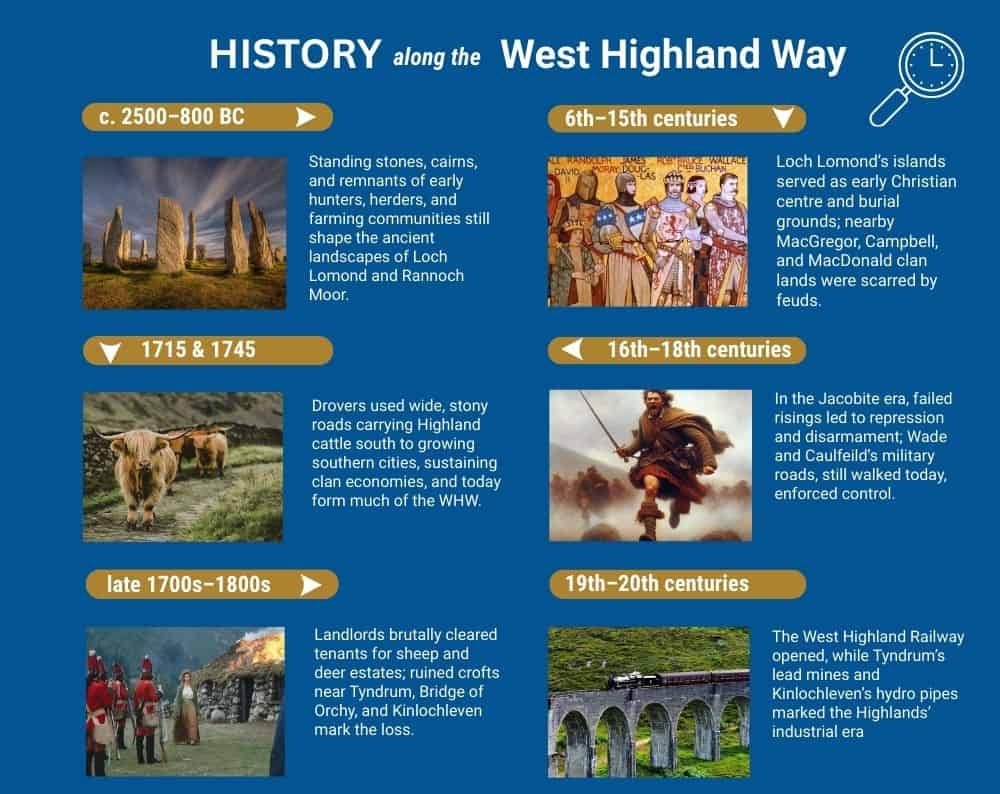
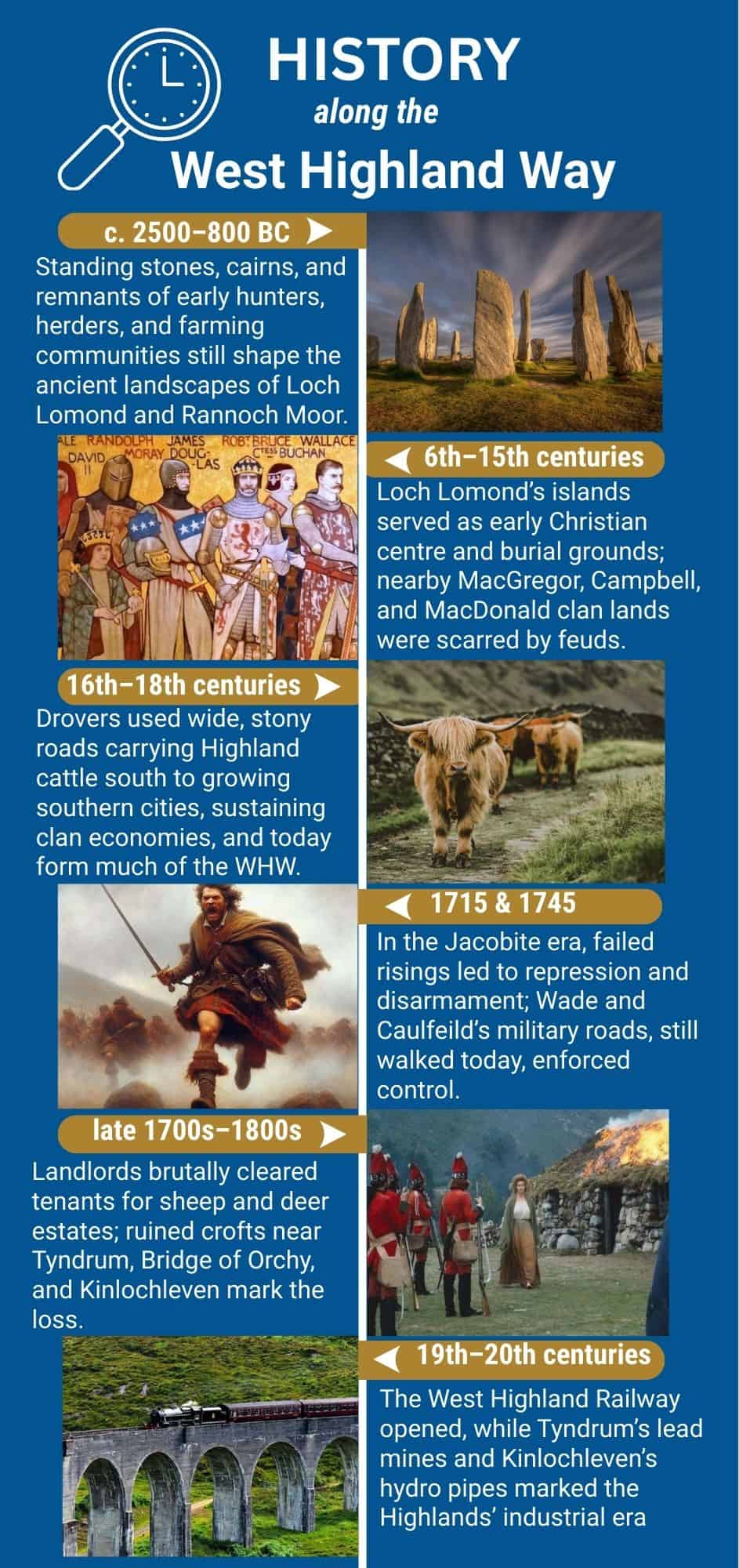
Although the history of this landscape stretches right back to 2500–800 BC, we’ll start our journey much later. That’s when things began to get really bloody, Braveheart-style. The Jacobite Rebellions set in motion the building of the very roads that over 45,000 hikers still walk each year.
The term “Jacobite” comes from Jacobus, the Latin form of James. The Jacobites were supporters of the exiled King James VII of Scotland (also James II of England), who was deposed in 1688. Many Scots, especially in the Highlands, remained loyal to the Stuart line and opposed the Protestant Hanoverian monarchy that replaced him.
The Jacobite Rebellions (1688–1746)
It quickly becomes clear that the ground underfoot has been shaped by centuries of political unrest, forced change, and human effort. Some of the paths followed today on the trail were first laid down in the wake of the Jacobite rebellions, a series of uprisings in the 17th and 18th centuries aimed at restoring the exiled Stuart monarchy to the British throne.
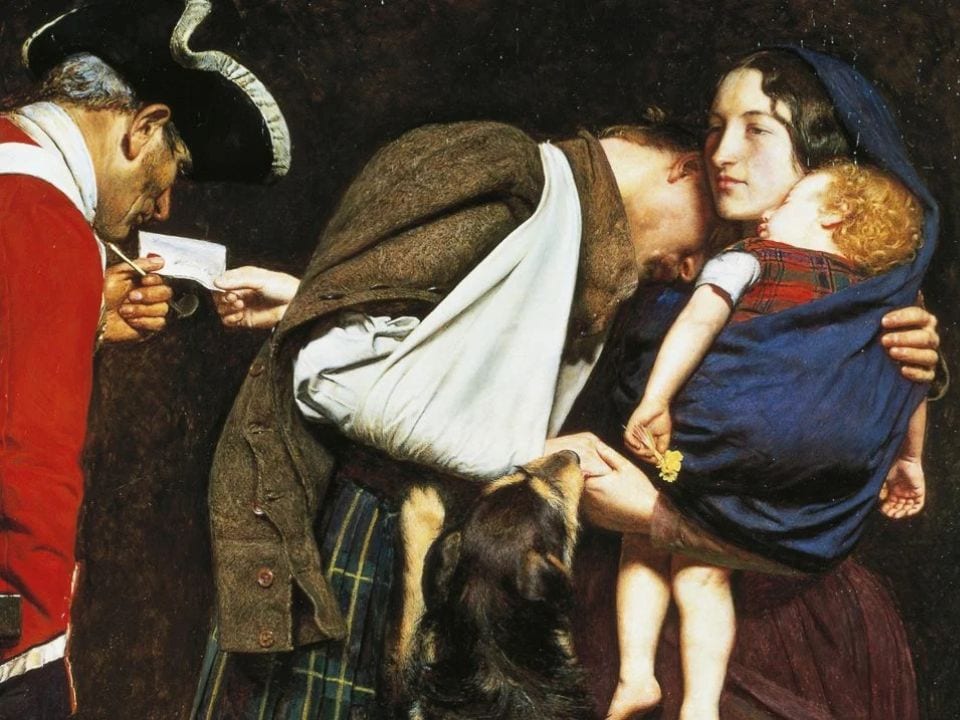
Many Highland clans had backed the Jacobite cause, and the punishment was swift and far-reaching. The Dress Act made it illegal to wear tartan or kilts, aiming to erase visible signs of clan identity. Gaelic was actively suppressed, and many families were forcibly displaced, leading directly into what is now recognised as the early phase of the Highland Clearances.
Millais’s The Order of Release (1853), now in Tate Britain, captures the aftermath of Culloden with a Jacobite wife securing her husband’s freedom. The scene highlights themes of love, sacrifice, loyalty, and resilience, as well as challenging traditional gender roles by portraying the wife as the strong, central figure. Walking the West Highland Way today, you tread the very roads first laid out in this turbulent period of rebellion and reprisal.


The Massacre of Glencoe (1692)
If you detour into Glencoe from the West Highland Way, you step straight into one of the darkest chapters of Highland history. The Massacre of Glencoe took place on the night of 13 February 1692. King William III had ordered all Highland clan chiefs to swear an oath of allegiance, and the MacDonalds of Glencoe were late in doing so, likely delayed by blizzards.
Government troops had already been lodged with the MacDonalds for nearly two weeks. Highland custom demanded hospitality, and they were treated as guests. But in the early hours of 13 February, the soldiers turned on their hosts under secret orders. Around 38 MacDonalds were killed, including their chief Alasdair MacIain, who had sworn the oath of allegiance days late after being delayed by snow and misdirection. Others fled into the winter mountains, where many died of exposure.
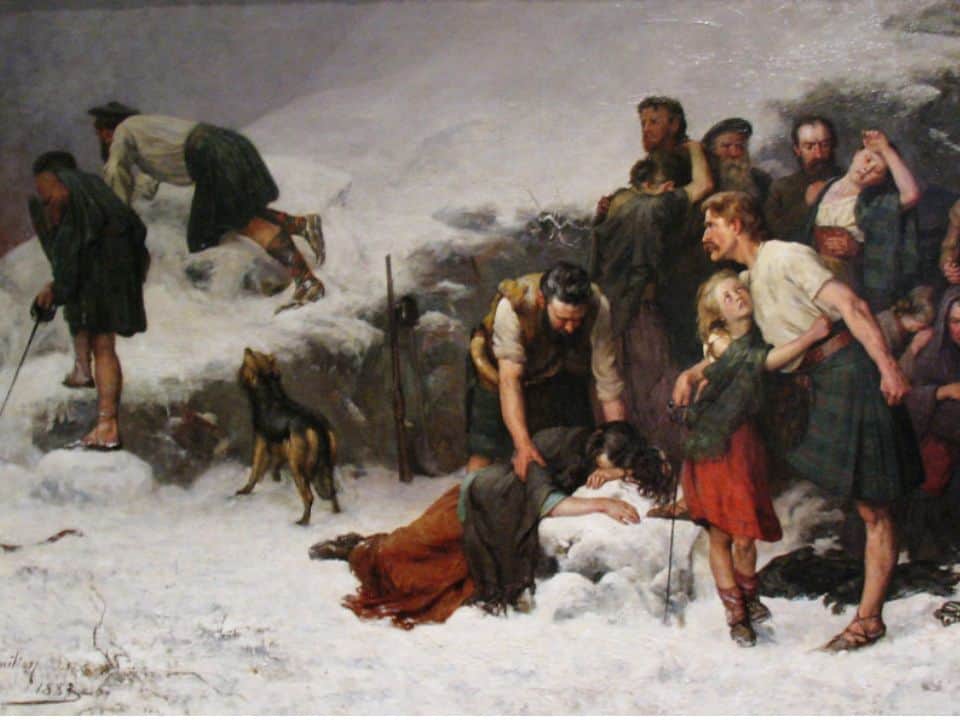
What made the massacre so shocking was not just the violence but the betrayal of trust. To kill men, women, and children while under their roof, after sharing their food, was an outrage against Highland codes of honour. The story spread quickly, fuelling resentment against the government and becoming a symbol of Highland suffering in the years that followed.
Today, Glencoe’s steep, brooding mountains seem to hold the memory of that night. In Glencoe village a tall Celtic cross stands in memory, but even without it, the valley itself feels like a witness. Walkers on the West Highland Way who pass through nearby Kingshouse are treading close to a history that is both haunting and unforgettable.

Dinnae Gatekeep the Good Stuff.
Ye’ve had yer turn, now pass it on tae the next soul!
The Road to Suppression
One of the government’s most visible responses was the creation of military roads, built to allow troops to move quickly through Highland territory. After the 1745 uprising, General Wade and later Major Caulfeild oversaw the construction of hundreds of miles of these routes. They weren’t winding footpaths made by farmers or herders. They were engineered corridors, deliberately carved into the landscape to control movement, break clan power, and establish a permanent military presence in the Highlands.
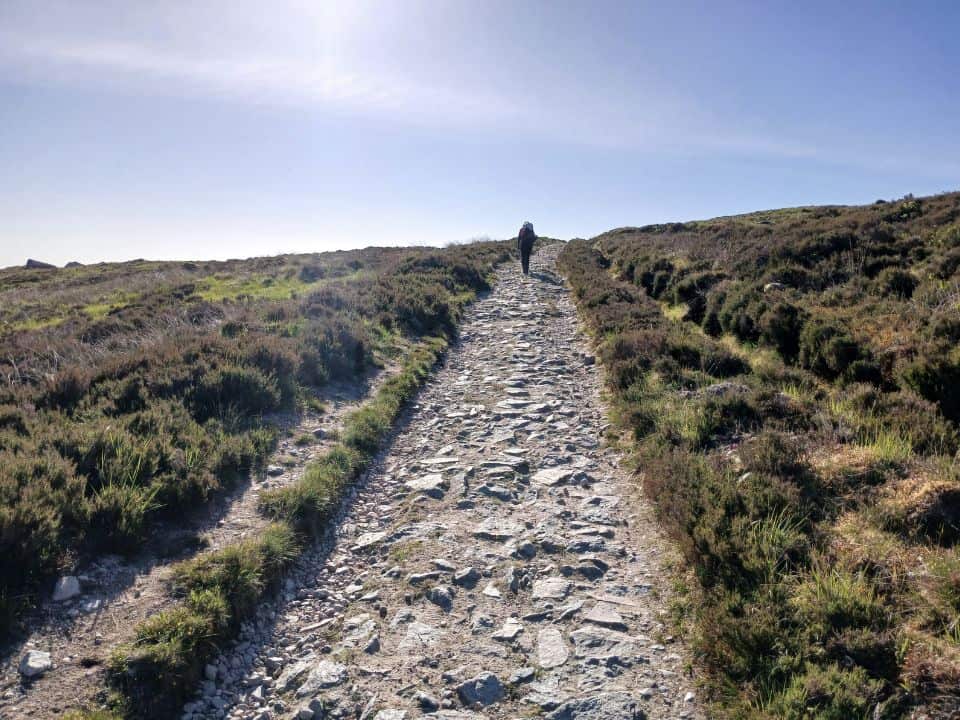
The West Highland Way follows some of these original alignments. Between Inveroran and Kingshouse, the path runs straight across Rannoch Moor along the route of an old military road, later upgraded by Telford. The compacted stone track, raised above the bog and edged with drainage channels, still follows the original line. Practical, deliberate, and confronting in its straightness.
Walking it, you feel funnelled through the landscape on someone else’s terms. This wasn’t just a way to reach the next valley. It was a way to impose control, and that purpose is still visible underfoot.

Free West Highland Way Packing List
Pack light, stay organised, and remember every essential for Scotland’s most famous long-distance trail. Add notes, save or print, and share with hiking partners. Works on any device.
The Highland Clearances
One of the most brutal histories beneath the West Highland Way are the Highland Clearances. After the Jacobite uprisings, from the late 18th century onwards, change turned ruthless. Landlords discovered that sheep brought more profit than tenants, and whole villages were driven out to make way for sheep farms and later vast deer forests kept for sport.
Clearance wasn’t just an eviction notice. In many places, families were dragged from their homes by sheriff’s officers or soldiers. Croft houses were set alight or pulled down so there was no shelter to return to. Entire communities were displaced in a single day.
Those who resisted were beaten or arrested, and while rape is not systematically documented, accounts survive of women being assaulted during forced evictions. The message was pretty clear: there was no going back.
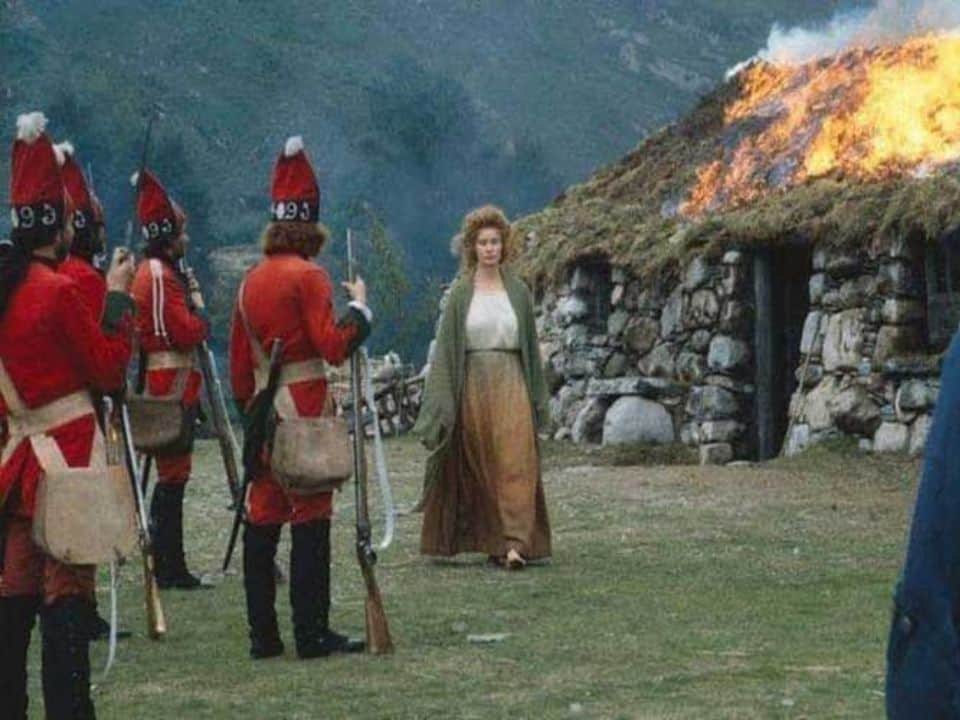
Gaelic language and communal farming traditions fractured within a generation. Some families were pushed to the coasts to scrape a living from fishing or kelp cutting, while others left Scotland entirely. Ships sailed from ports like Oban and Glasgow, taking Highlanders to Canada, Australia, and New Zealand. My ancestors among them.
Tigh-na-sleubhaich
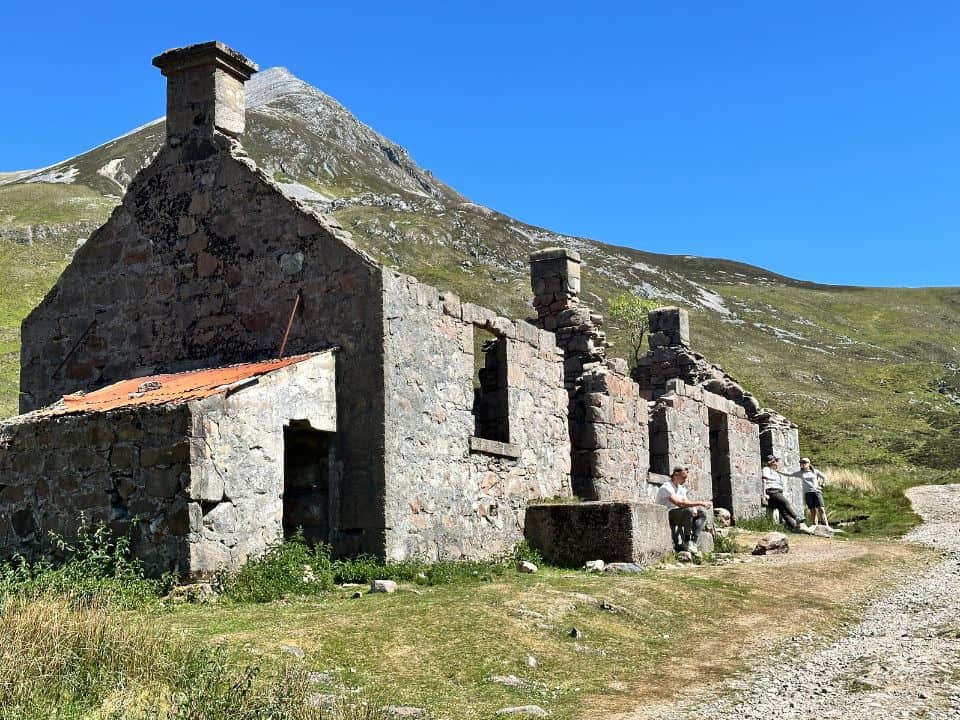
One of the most visible reminders of the Clearances along the West Highland Way is the ruin of Tigh-na-sleubhaich, whose name means “house by a gully” or “house by a gullied slope.” It sits in the Lairig Mòr, between Kinlochleven and Lundavra, and today it’s a popular stop for walkers to pause for lunch or a rest.
Echoes from the 6th–15th Centuries
Long before Jacobites or Clearances, the Scottish Highland glens were already marked by conflict and kinship. The West Highland Way passes near sites that reach back to the 6th–15th centuries, when Norse raids and clan feuds left their traces.
This was the period when Christianity spread through the Highlands, with places like St. Fillan’s Priory near Tyndrum and early chapels marking the landscape. Norse influence reached far inland through raiding and settlement, while rival clans such as the MacGregors, Campbells, and MacDonalds fought for control of grazing land, trade routes, and strategic passes.
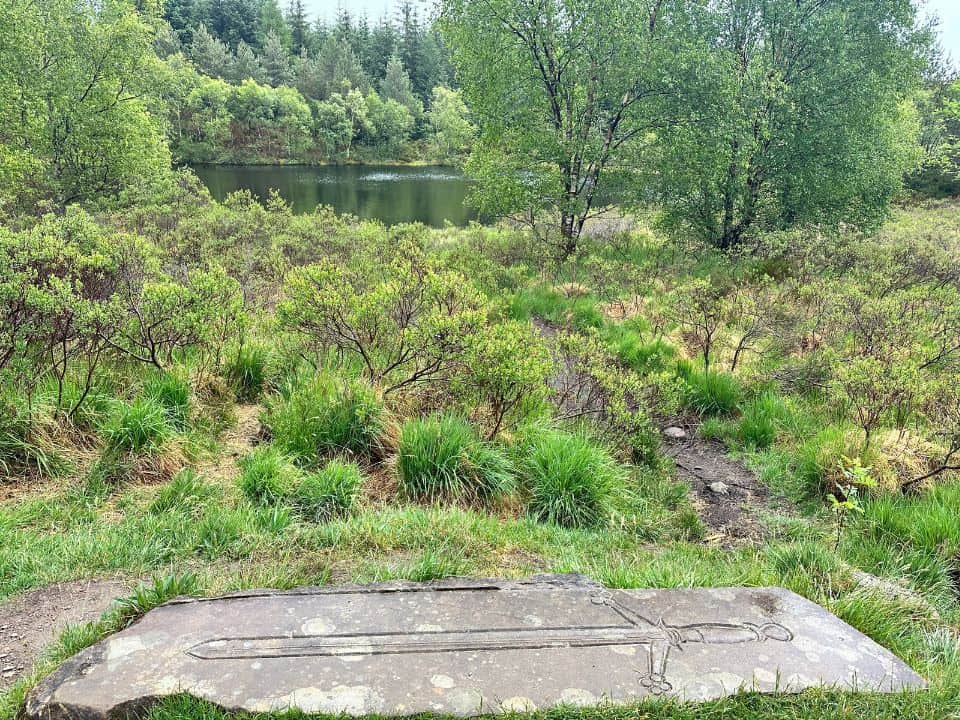
Evidence of this medieval world still surfaces along the WHW corridor, with carved graves around Loch Leven showing sword motifs, Inchmurrin Castle on Loch Lomond, and the early Christian burial ground on Inchcailloch.
From ruins that whisper of medieval kinship, we move to the 19th century, when Telford’s roads left a different kind of mark
Telford and the Parlimentary Roads
At the other end of the timeline stands Thomas Telford, the great engineer of the early 19th century. His parliamentary roads followed the same lines as the military tracks laid down after the Jacobite rebellions. However, his instruction was to improve them for trade and travel. Many sections survive today. For example, the stretch between Inveroran and Kingshouse is still walked daily by hikers on the West Highland Way.
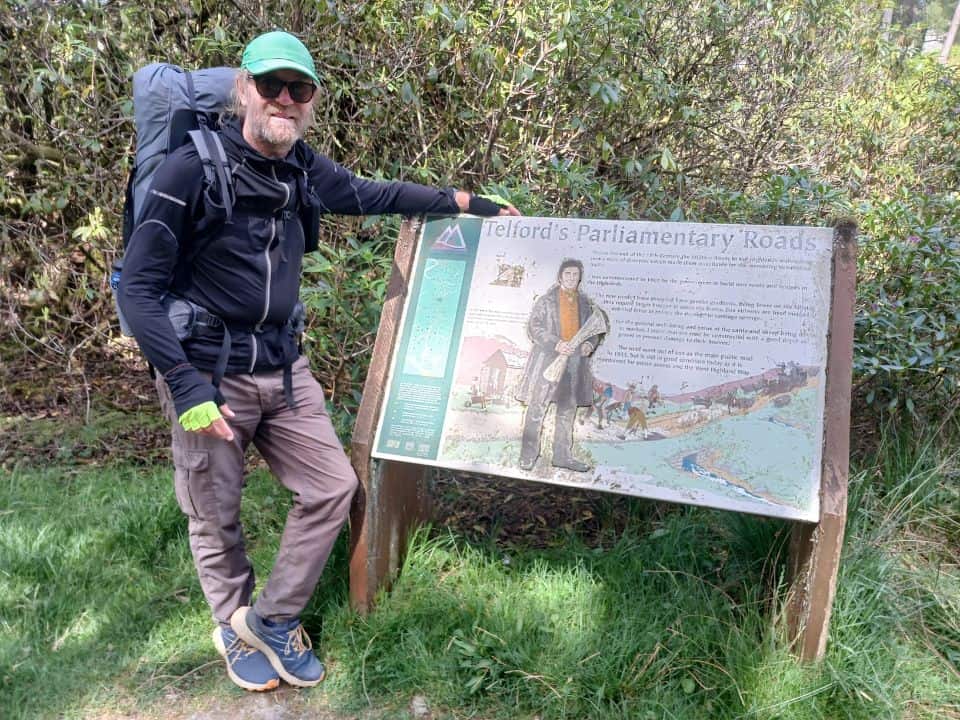
But roads work both ways. Telford wasn't responsible for the Clearances, but his infrastructure made them easier to carry out. Landowners and their factors now had direct access to glens that were once isolated. Evictions could be enforced more efficiently, and the same routes built to sustain Highland life became exit corridors for those forced to leave.

Pass It On, Like a Good Bit o’ Shortbread
Good things are meant to be shared. This blog too!
The WHW Today, With Yesterday Beneath It
Knowing all this history really can change the walk for many. The West Highland Way is not only a route through striking landscape, but also a path through stories of resilience, loss, and survival. Every ruined wall speaks of lives once lived here, and every step carries echoes of the people who called these glens home.
Thank you for reading, it was a pleasure to write. If you enjoyed it, or if it’s inspired you to walk these roads, take a look at our other in-depth guides below. The West Highland Way is an amazing walk and deserves a place on everyone’s bucket list!

Frequently Asked Questions
What were the Highland Clearances in Scotland?
The Highland Clearances were 18th–19th century evictions where tenants were forced off their land so estates could be turned to sheep farming or deer forests. Many families were pushed to the coast or emigrated to Canada, Australia, and New Zealand. Entire villages were destroyed to prevent people from returning.
Why did the Highland Clearances happen?
Landowners realised that sheep farming was more profitable than tenant rents. Economic pressures, new agricultural practices, and a desire to control land use all drove the Clearances. Some evictions were brutal, with homes burned or dismantled, while others involved financial pressure that left families with no choice but to leave.
Where did people go after the Highland Clearances?
Some displaced families were moved to poor coastal plots where they relied on fishing or kelp. Many emigrated overseas, with ships leaving for Canada, the United States, Australia, and New Zealand. Others moved south to the Lowlands in search of work. The Clearances scattered Highland communities across the world.
What did Thomas Telford build in the Scottish Highlands?
Thomas Telford, known as the “Colossus of Roads,” built parliamentary roads, bridges, canals, and harbours across the Highlands in the early 19th century. His roads improved access to remote glens, following earlier military routes. While intended for trade and travel, they also made enforcement of evictions during the Clearances easier.
Why were Telford’s roads important?
Telford’s roads connected isolated parts of the Highlands to markets, towns, and ports. They made travel and trade easier, helping integrate the Highlands into the wider economy. At the same time, the roads allowed landlords and authorities faster access to remote communities, which indirectly supported the spread of the Clearances.
Who were the most powerful Scottish clans?
Several clans held power over centuries. The Campbells rose through royal favour and land ownership, becoming dominant in Argyll. The MacDonalds, as Lords of the Isles, once ruled the western seaboard. The MacGregors, though often persecuted, were feared for their fighting reputation. Clan influence shaped politics, alliances, and rivalries in the Highlands.
What happened to the MacGregor clan?
The MacGregors were outlawed in the early 17th century after conflicts with neighbours, especially the Campbells. Their name was banned, and members risked execution if they used it. Despite this, they survived through aliases and alliances. By the 18th century, restrictions eased, but their reputation as a defiant clan endured.
What was the role of the Campbells in Highland history?
The Campbells became one of the most powerful clans, gaining land and influence through loyalty to the crown. They were often at odds with rival clans like the MacDonalds. Their alignment with government forces during rebellions made them both influential and controversial, particularly due to their association with the Massacre of Glencoe.
Who were the MacDonalds of Glencoe?
The MacDonalds of Glencoe were a branch of the larger MacDonald clan. In 1692, they were victims of the Massacre of Glencoe, when government soldiers killed members of the clan for being late in pledging loyalty to King William III. The betrayal, carried out under the guise of hospitality, shocked Scotland.
How did the Jacobite risings affect the Scottish Highlands?
The Jacobite risings of the 17th and 18th centuries led to harsh reprisals in the Highlands. Traditional clan systems were targeted: tartan and kilts were banned, Gaelic was suppressed, and land use was restricted. These measures broke clan power and paved the way for the later Clearances, reshaping Highland society permanently.