
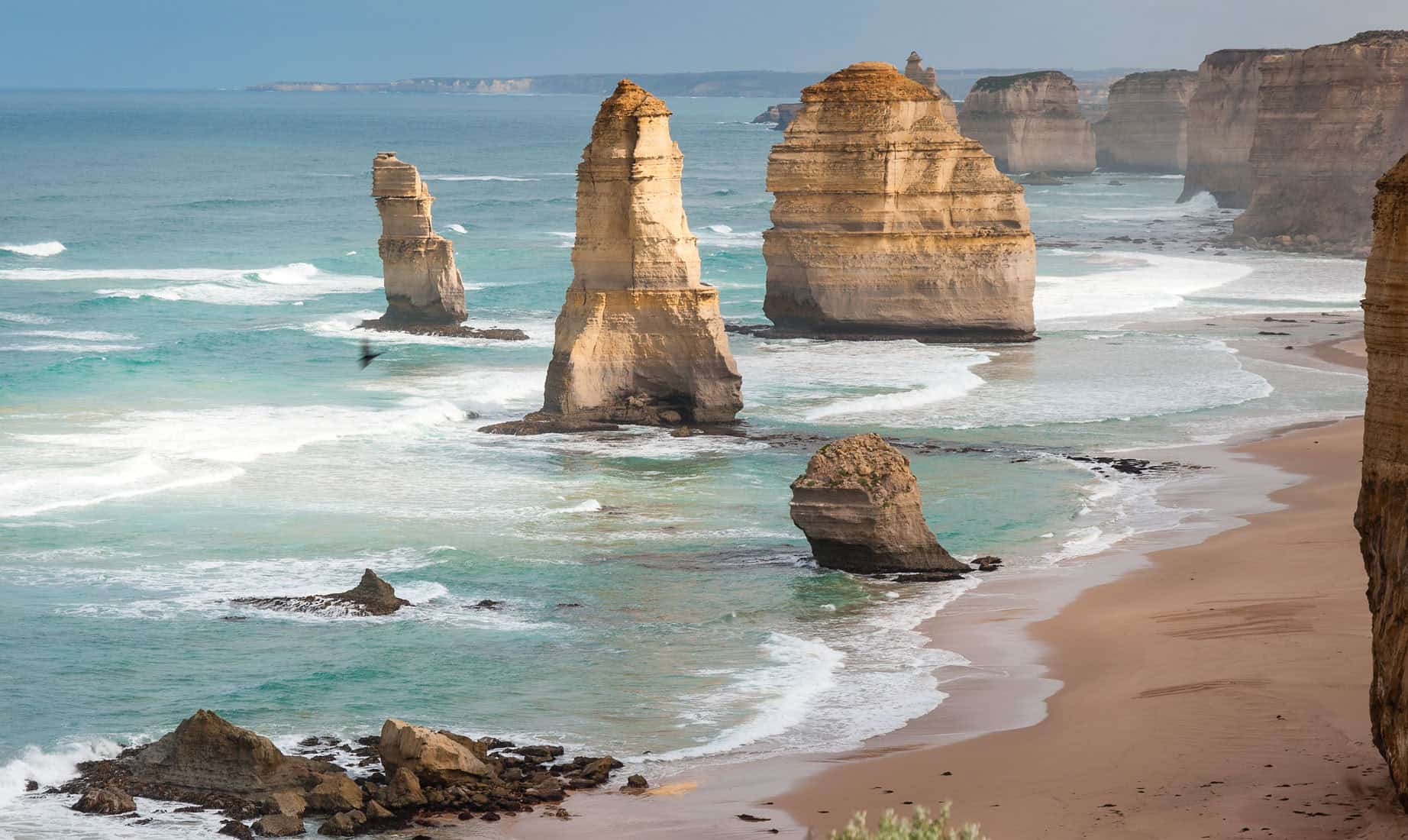
Hiking the Great Ocean Walk Solo, The Best Hike for Beginners
Are you wanting to hike the Great Ocean Walk?
Hiking the iconic Great Ocean Road Walk was a last-minute decision – AND my first multi-day hike. The Great Ocean Walk is a perfect entry level, multi-day hike. It's relatively easy to get to and just the right length. Plus, it's insanely beautiful.
The Great Ocean Walk hugs the coast and runs parallel to the Great Ocean Road, an Australian National Heritage-listed 240-kilometre stretch of road between the Victorian towns of Torquay and Allansford.
As well as being an extremely picturesque road, the Great Ocean Road is, in fact, the world's largest war memorial. Built by returned soldiers between 1919 and 1932, the road is dedicated to soldiers killed during World War I.
While the road is pretty spectacular, the Great Ocean Walk takes it to another level.
The Great Ocean Walk is often hailed as the best hike for beginners. It was my first multi-day hike, and in sharing my story, I'll highlight both the mistakes I made and the triumphs that ignited my passion for longer hikes.

This article may contain affiliate links. If you make a purchase using one of these links, we may receive compensation at no extra cost to you. See our Disclosure Policy for more information.
Great Ocean Walk Quick Facts
| Location | Apollo Bay to 12 Apostles – Victoria, Australia |
| Distance | 110 km / 68 mi |
| Elevation Gain | 2714 m / 8904 ft |
| Highest Point | 295 m / 967 ft |
| Duration | 6-7 days |
| Trail Type | Point to Point |
| Grade | 3-4 |
Great Ocean Walk Map and Resources

The official map for the Great Ocean Walk can be purchased from the Great Ocean Road Apollo Bay Visitor Information Centre in person or over the phone on 1300 689 297.
For an online Great Ocean Walk map, I recommend GAIA which has a monthly subscription and is a great resource.
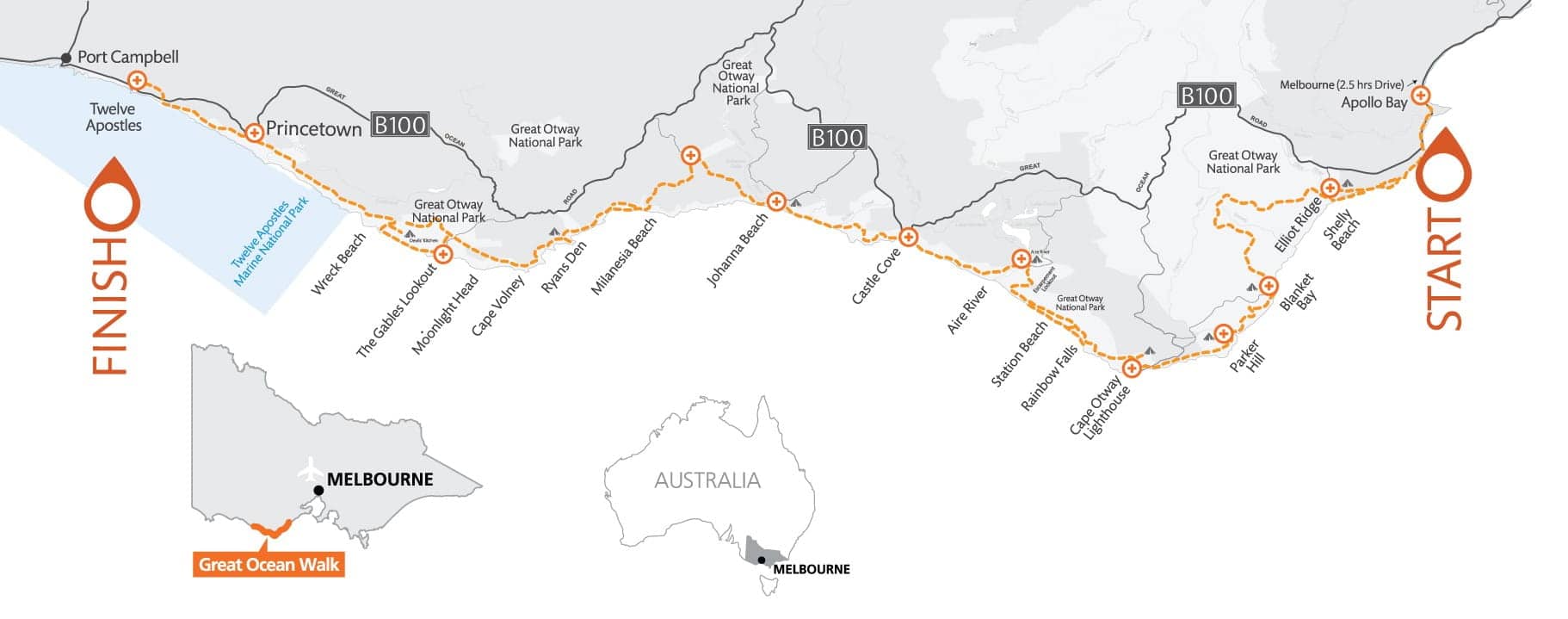
Below is the basic map provided by Parks Victoria. It is not to be used for navigational purposes, but to give you an idea of the layout when planning your campsites and itinerary.
Know Before You Go
The Great Ocean Walk has been designed to walk east to west, starting at Apollo Bay and finishing at the 12 Apostles. Reason being is that it reduces the impact of walkers and the spread of Cinnamon Fungus (Phytophthora).
The Great Ocean Walk can be hiked as one long 7-day hike or shorter 1-3 day hikes, as there is road access at almost all eastern sections.
The Great Ocean Walk has a mixture of easy, moderate, and challenging walks for those wanting shorter day, overnight, or weekend hikes and it's this aspect that makes it the best hike for beginners.

Fees and Registrations
No permit fees or registrations exist, but campsites must be booked, and campsite fees apply.
Supply and Resupply
There are no resupply options throughout The Great Ocean Walk. Apollo Bay has supermarkets for food supplies, and the surf shop and hardware store on the main road sell gas.


Best Time to Hike The Great Ocean Walk
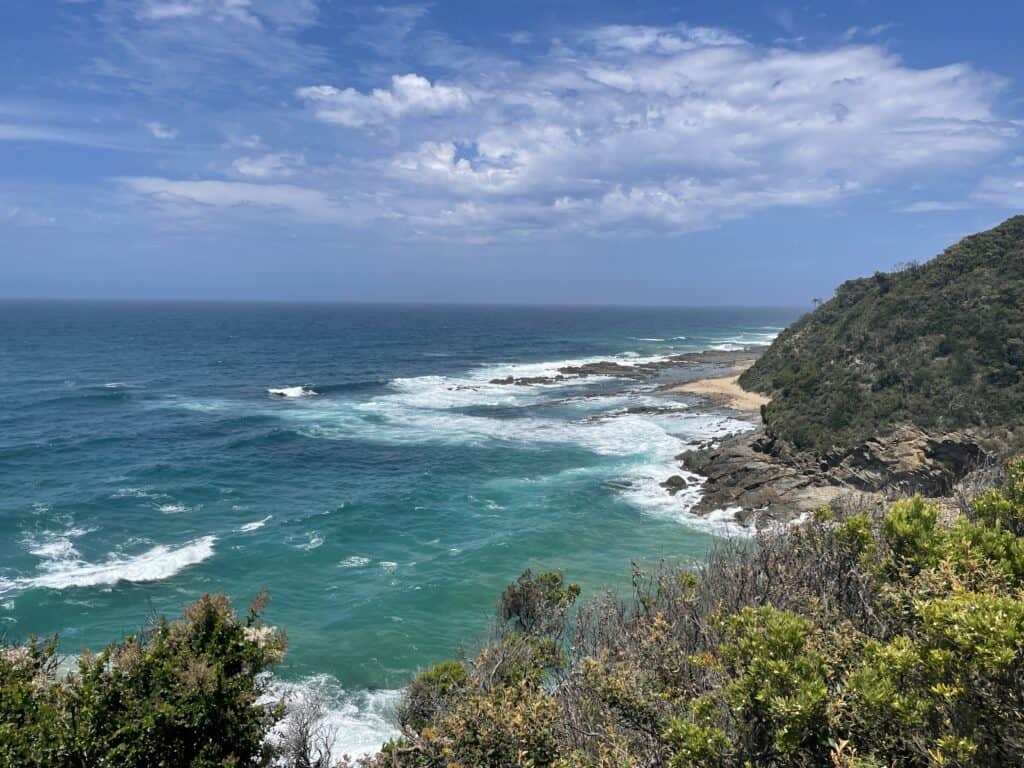
No seasonal closures. May through November are the wettest and coldest months of the year and are best avoided.
Route Description
Unformed track, boardwalk, wooden stair sections, and beach walking and the track is well-marked. “Decision Point” signs are at the start of each beach crossing as sections of track can be dangerous or impassable at high tide.
The first two sections are relatively easy and would make a great section hike for a beginner.


Water Sources
Water is available at each of the Great Ocean Walk campsites. The water is untreated, and you will need to filter or treat it.
The tanks rely on rainfall, so keep this in mind during mid-summer periods of drought. If in doubt, call the Apollo Bay Visitors Centre ahead of time.
Great Ocean Walk Campsites
The Great Ocean Walk campsites are pretty spectacular in that almost half are set on the cliff tops overlooking the ocean.
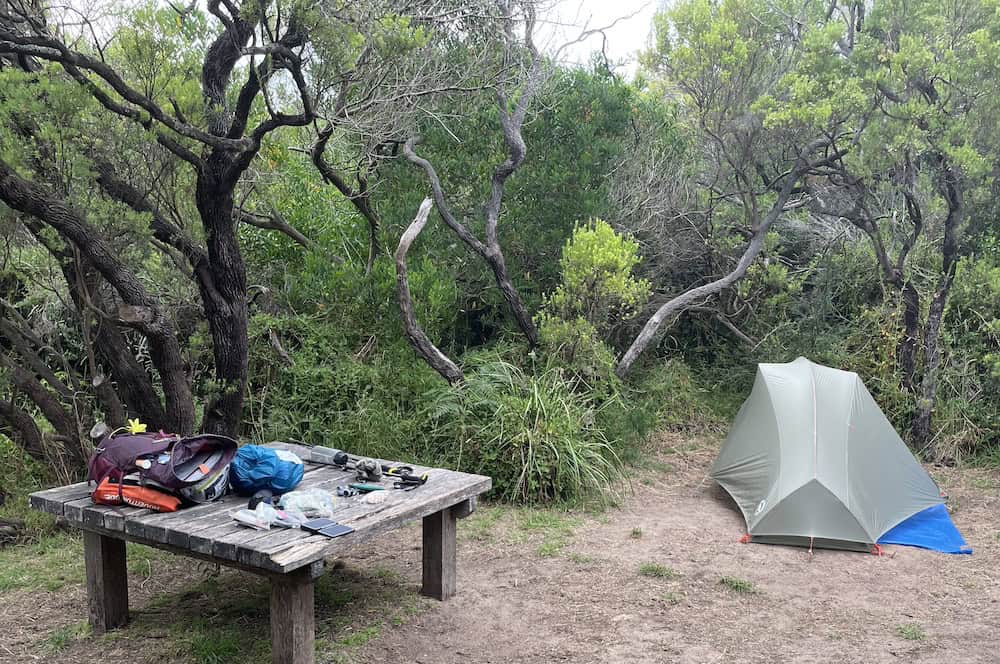
Each campsite has a composting toilet, water tank, and a 2.5-walled shelter with a large table and seating benches, and each shelter has a trail and information map, providing details of the next section.
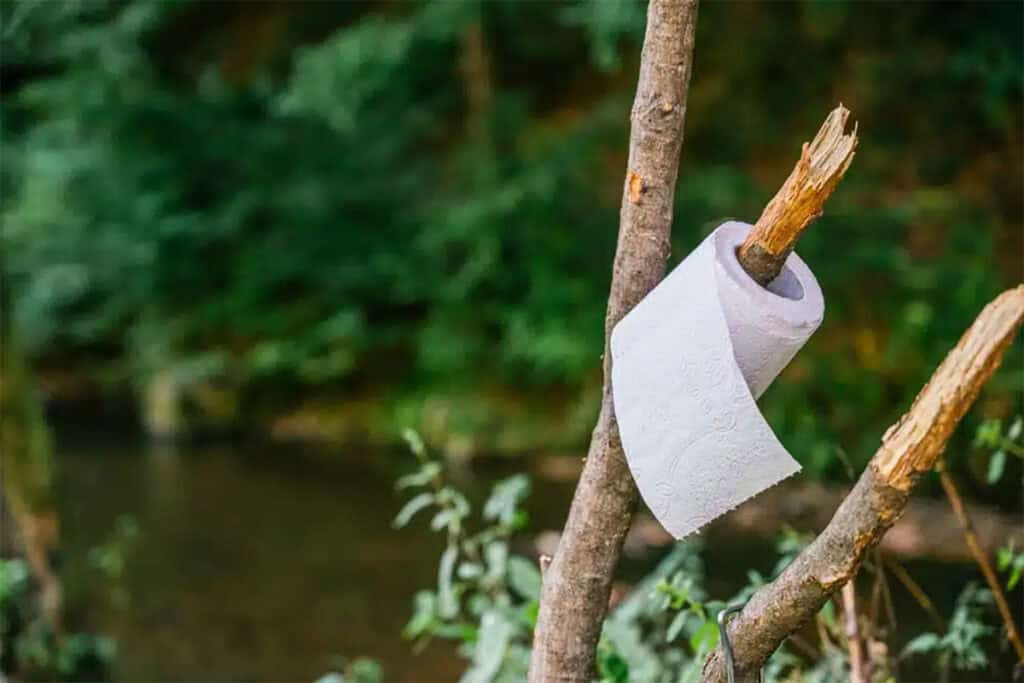
Toilet paper is provided; however, as hikers should carry a poop kit, you should have your own toilet paper in any case.
The Great Ocean Walk campsites must be booked in advance, and the receipt must be carried with you. Book Great Ocean Walk campsites here.
Boot Cleaning Stations
Boot cleaning stations are set up to scrub your boots at Parker River, Blanket Bay, and between Castle Cove and Johanna Beach along the trail.
These are designed to help prevent the spread of the cinnamon fungus, which attacks & rots the root systems of native plants, robbing the area of its rich biodiversity.
This fungus is rampant across all Eastern and Southern states, so cleaning your trowel and tent pegs is also necessary.
Dogs and Drones
Dogs are not allowed. No drones without a permit.


The Safety Aspect
As much as the Great Ocean Walk is simply stunning in its coastline, there are also some high danger aspects to be aware of. Funnily enough, in my opinion, these danger concerns provide excellent training ground for the best hike for beginners.
The Great Ocean Walk is in a fire danger zone and the beaches fringe the Southern Ocean, known for its strong winds and intense storms. Understanding these forces of nature is so important for a safe but enjoyable hike.

Like This?
We'd love you to share this great guide!
Fire Risk
The Great Ocean Walk is in a high bushfire risk area. There is no safe place to shelter and survive a bushfire, and bushfires may escalate with little or no warning.
We recommend filling out a trip intention form so the SES can locate you and get you to safety in the case of Fire.
Tides, Beaches and Un-bridged River Crossings
When hiking the Great Ocean Walk beach sections and rock platforms, it's important to be aware of tides and ocean swells. Some areas can become risky or even impenetrable during extreme high tides or formidable swells, as the conditions often shift rapidly
On the Great Ocean Walk, stretches like the 300 metres of Milanesia Beach and the 2 kilometres along Johanna Beach are usually accessible when tides are low and the weather is calm.
Wreck Beach near Moonlight Head is a significant hazard zone, encased by cliffs with no escape if a wave surge occurs. The danger of being stranded by a rising tide or unexpected wave surges here is real and should not be underestimated.
Be alert that from the cliff-top paths, Wreak Beach may not appear treacherous until you've descended to the beach, which is why Parks Victoria advises only attempting this stretch during low tide.

‘Decision Point' signs are clearly marked at each beach access point, corresponding with the official Great Ocean Walk Information Guide and map.
There's a two-hour difference in tide times between Apollo Bay and the Twelve Apostles, which you should account for when planning your hike.
West of Moonlight Head, including Wreck Beach and up to the Twelve Apostles, you should reference the Port Campbell tide times.
Download the tide charts here


Emergency Communication
Due to the high risk of fire in the area, it. isa good idea to carry some sort of emergency communication. There are two main types that hikers typically use. One is a Personal Locator Beacon, which is a one way device and extremely accurate as it uses the international COSPAS-SARSAT satellite system. This satellite is government funded and is the main one used for search and rescue globally. I use a Rescue Me PLB.
The other communication device which is commonly used is a two way Satellite Emergency Notification Device, otherwise known as a SEND. A common brand amongst hikers is the inReach Mini. These devices use private satellite systems (hence the cost), and enable two way messaging between hikers and the outside world.
Great Ocean Walk Sections and Distances between Campgrounds
| Apollo Bay Visitor Centre to Elliot Ridge | 10km / 6.2 miles 3hr 30 min Easy |
| Elliot Ridge Camp to Blanket Bay | 12km / 7.5miles 4hr 30 min Easy |
| Blanket Bay Camp to Cape Otway | 11km / 7 miles 3hr 45 min Easy/Medium |
| Cape Otway Camp to Aire River | 10km / 6.2 miles 3hr 15 min Medium |
| Aire River Camp to Johanna Beach | 14km / 8.5 miles 5hr 15 min Medium |
| Johanna Beach Camp to Ryans Den | 14km / 8.5 miles 5hr Medium/Hard |
| Ryans Den Camp to Devils Kitchen | 13km / 8 miles 5hr 15 min Medium/Hard |
| Devils Kitchen Camp to Twelve Apostles | 16km / 10 miles 5hr 15 min Easy/Medium |
Track Notes: Hiking the Great Ocean Walk Solo
Day 1 – Apollo Bay Visitor Centre to Elliot Ridge
The Great Ocean Walk was my very first multi-day hike and as I arrived at Melbourne Airport and made my way to Apollo Bay, I was super excited.
I'd learned to put my brand new tent up in a camping ground, but realistically, that was about the sum of it, apart from a “test day hike” using my new backpack. How things have now changed!
I arrived at Apollo Bay and headed for the visitors centre on the Great Ocean Road. It's easy to find, as it's on the beach side of the road set in the park. I bought a map, sat down, and tried to get my bearings.
Right at that moment, I felt a little out of my depth, but the kind lady behind the counter pointed me in the right direction.
It was 5pm at this stage, and from my research, I knew that the first campsite was about 3 hours away and the sun was setting about 8.30pm. So I knew I had time – I just hadn't studied other aspects I now consider, such as elevation!

The Start of The Great Ocean Walk
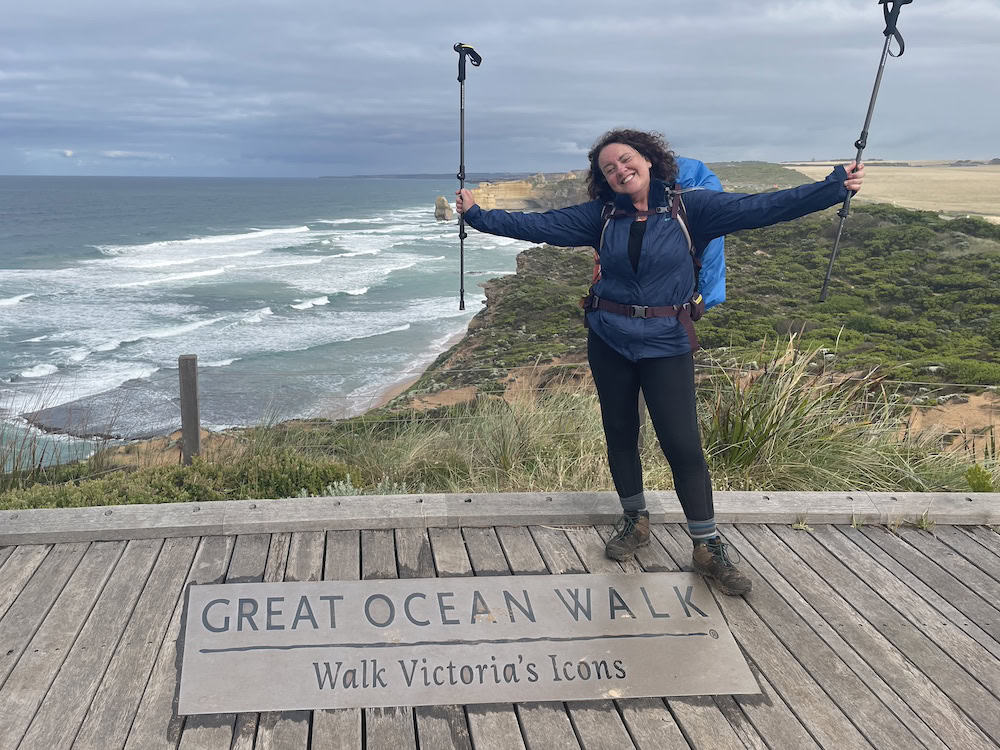
The start of the Great Ocean Walk is officially right outside the visitor's centre, with a large wooden platform and a metal placard. Another first – I'd never seen a trailhead for a “Great Walk” before and felt rather chuffed while a random person took my photo for me.
The first couple of kilometres involve walking through suburban streets to the southern end of town, and I really thought I'd got lost.
I stopped and asked a few holidaymakers if I was on the right path, but the only person who could give me a proper answer was a drunken local with a stubby of VB in his hand. He wished me a Happy New Year and offered me a fresh fish to take on my journey, as it was a “long walk.” I thanked him and told him I had dinner sorted.


After locating the trail at the end of the camping ground, it was time to walk on the beach and along rocky outcrops with tidal pools. I knew the trail marker to the first campsite, Elliot Ridge, was along this stretch, which would take me up to the ridge.
I can't remember my exact emotions at the time, but seeing my first trail marker just boosted my confidence.
There are dedicated Great Ocean Walk campsites for walkers. which is fantastic as the track hugs the Great Ocean Road with several drive-up camping spots, so you can bypass these and head for the walk-in campsites.
I finally made it to Elliot Ridge campsite right at dusk, and feeling like a school kid on her first day of school, I carefully laid out my tent and got my food ready. The sense of achievement was rather grand. It was rather fitting that this particular night was New Year's Eve.

Pack Light, Pack Right. Free Multi-Day Hiking Packing List
Plan methodically and keep track of every essential for your next multi-day hike. Add notes and quantities, save or print your list, and share it with hiking partners so everyone knows what’s covered. Works on any device.
Day 2. Elliot Ridge Campground to Cape Otway
The next morning was a couple of firsts (apart from being the 1 January). I went to the water tank to fill up my water bladder, and the water that came out was a peculiar shade of green.
My water filter at that time was an MSG TrailShot Microfilter. It was the first time I'd ever used it, and I remember watching in amazement as the filtered water came out crystal clear. Super Cool! My first win.
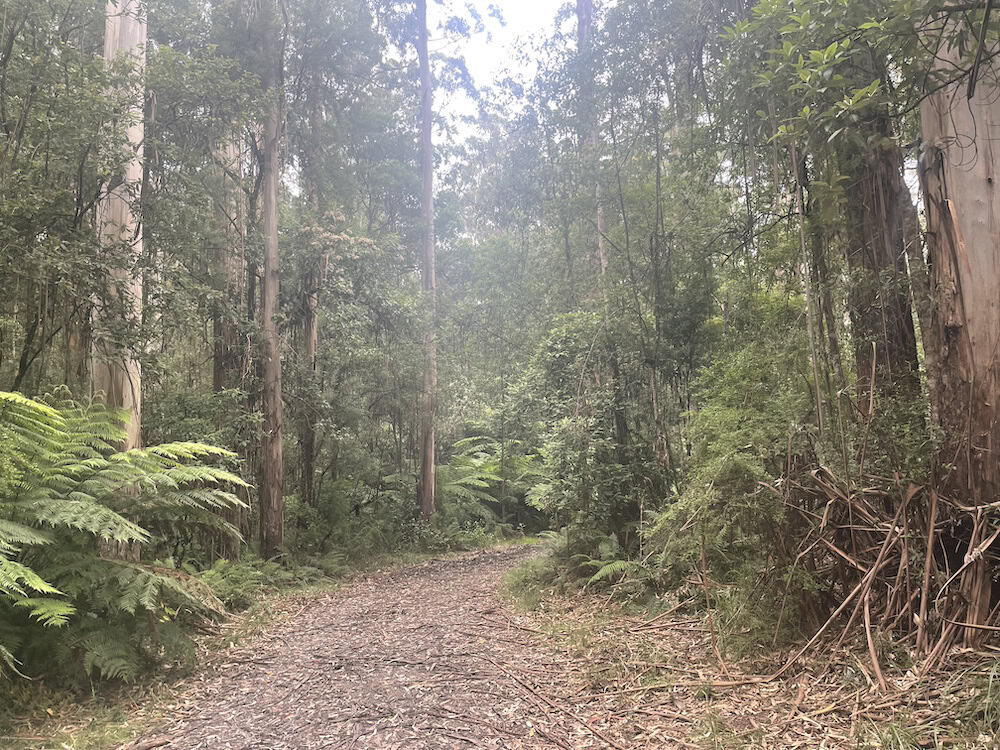
I headed out of the campsite toward Cape Otway and found myself on a lovely flat, meandering track through gumtrees. I kinda thought at the time – “Well, this is easy”.
I then had my second first. I needed to “go”. I'd bought a Sea to Summit iPOOd pocket trowel, a folding trowel with a plastic “spade.” The ground was hard and dry. Digging a cat hole with this little blunt spade was “problematic,” it took me ages.
I eventually got there, but I've mastered the technique way better since then. Plus, I now use a Deuce Backpacking Trowel as it's lighter and much sharper.


Decision Points on the Great Ocean Walk
The next hurdle was getting to Cape Otway. Due to limited campsite availability in these sections, I'd decided to walk 2 sections that day. Plus, there were two longish beach walks.
As per the information pack I'd received from Parks Victoria, I'd timed my arrival to be low tide. There are several “Decision Point” signs ahead of each beach and river crossing, encouraging you to check the tide charts and either walk an alternate route or wait.
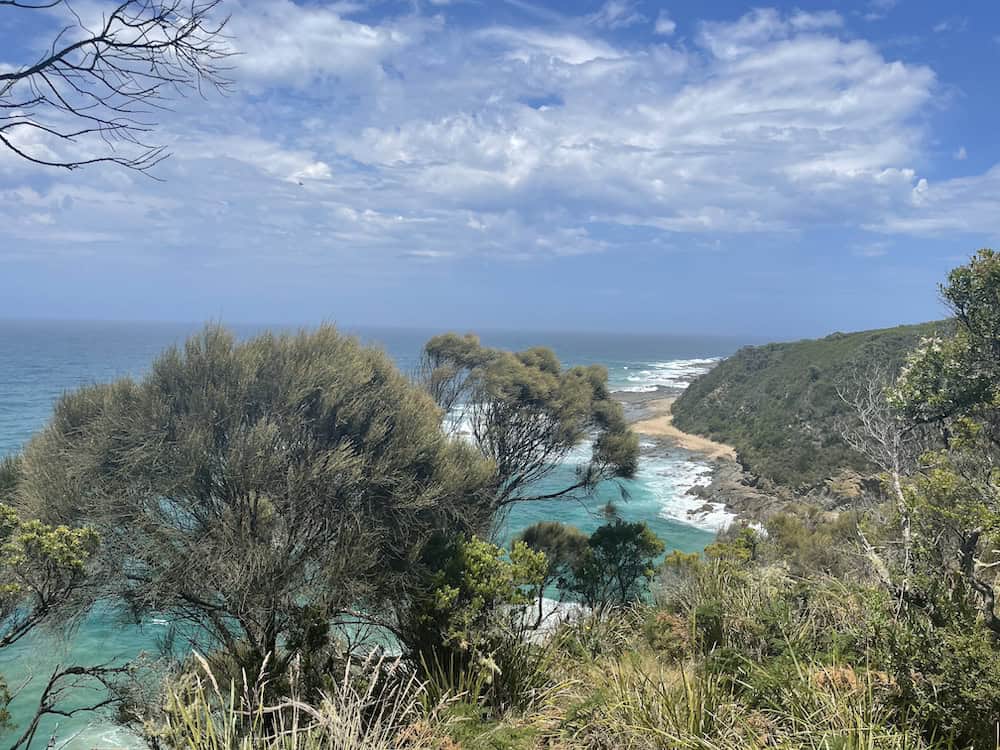
The beach walk wasn't as bad as I'd expected, and soon, I was back on the headland, marvelling at the Great Southern Ocean as I made my way to Cape Otway lighthouse and grabbed an ice cream at the lighthouse kiosk.
The Cape Otway campsite was one campsite that was not exclusively for Great Ocean Walk hikers, so it was busy – and noisy, especially over the prime holiday season.
Day 3 Cape Otway Campground to Aire River
This section of the Great Ocean Walk was cruisey as it was only 10 km. A lot of beach walking again, but luckily, low tide was around noon, so I had plenty of leeway.
I'd left early, so I got to the Aire River campsite and set up at midday. The campsite was a nice retreat after the busy Cape Otway campsite, and where I set my tent up was peacefully tucked away amongst some Wattle trees.
Each site had a wooden platform for sitting and sorting out your things. The platforms were about 1.5m sq., so not a tent platform. The tent pads in all sites on the Great Ocean Walk are on bare earth.
You could walk to the river and swim, which was refreshing, and if I remember correctly, there was a bit of cell phone service here.

At this point, I'd started chatting to the other hikers who were following the same trail, and this was my first hint at hiker camaraderie.
Aire River campsite had a 2.5 wall shelter, with a large solid square table that could seat 10-15 people. I found that these shelters were in every campsite heading west.
It was the first time I'd sat down with other thru-hikers, and it was on this hike I learned so much about multi-day hiking by observing and chatting. That's one great thing about the hiking world; hikers are often keen to impart knowledge and experience.
It rained that night, and I remember blissing out – the first rainy night in my tent, just thinking how marvellous this was.


Day 4. Aire River Campground to Johanna Beach
The next morning, I woke to rain, another first, having to sort and pack up inside my tent. I managed this and then packed up my wet tent as per usual.
Nowadays, I would put my wet fly on the outside of my pack, but the novice that I was stored it with the rest of my tent – basically getting the whole thing wet. Lesson learnt.

The track hugged the cliff face, and although it was raining and stormy, the vista was simply breathtaking. I really enjoyed that day – wet and all!
My scary moment came when I had to cross the inlet at Johanna Beach. Due to the rain, the river was running pretty strong, and the waves receding created a dangerous rip.
I was soaked when I got to Johanna Beach GOW walk-in campsite, and the shelter offered little respite as the wind and the rain were being driven directly into it.
Johanna Beach has some fantastic sites set right on the ridge overlooking the Great Southern Ocean. Unfortunately, it was cold, blustery, and pretty much unpleasant, so I opted to pitch further away from the cliff.


Tent Pole Repair!
That night, I had another first. I got up in the middle of the night, in the wind and the rain – you may know the feeling: “Do I REALLY need to get up?” I did my business and went to get back into my tent.
In my haste, I stepped onto one of the tent pegs and fell onto my tent, breaking a pole and ripping a 3-inch hole in both my tent and inner. Nice.
It's the middle of the night, raining, and I'm the only one awake. I remembered Big Agnes had supplied a sheath in my tent peg bag; I had no idea how to use it. I had to take the fly off and just work it out.


Also known as a pole repair sleeve or pole repair splint, essentially, the sheath holds the two broken bits in a splint.
Some websites advise taping the splint. I didn't because I hadn't any tape (another rookie mistake), but also, the tautness and curve of the pole helped the sheath stay in place.
It would depend on where the break is and if a curve is apparent in the tent frame that stays the sheath.
Note: if you don't have a sheath/splint/sleeve, you can use a tent pole as a splint – however, you will need tape for this application.
If you're new to this and have no idea what “that little tube” is for, don't ditch it. It was a lifesaver for me that night. You can use this emergency application for several days, and when you get back home, replace the broken piece and fix the shock cord.
I also carry my sheath in my Utility Pouch, as I have since lost one when it was kept with my tent pegs.
Pack Light, Pack Right. Free Multi-Day Hiking Packing List
Plan methodically and keep track of every essential for your next multi-day hike. Add notes and quantities, save or print your list, and share it with hiking partners so everyone knows what’s covered. Works on any device.
Day 5. Johanna Beach Campground to Ryans Den
Great Ocean Walk Amazing Toilet Views
Respite came the following day with light rain and no wind. The majority of the track in this section is inland, and there were a lot of ascents and descents, as well as navigating slippery wooden stairs or rock steps.
The muddy and slippery path made some of the track challenging, starting with a steady climb up from the campground.

I eventually ended up at Ryan's Den campsite. One thing about the Great Ocean Walk campsites is that they are all stunning! Ryans Den is another of the campsites that hug the cliff, and the tent pads have access to at least a seat with beautiful views over the ocean.
Ryan's Den is one of the three toilets with a great view. A large window in the toilet looked directly into the bush, while the window in the toilets of Johanna and Devils Kitchen, the next campsite, looked out over the ocean. Pretty cool.


Day 6. Ryans Den Campground to Devils Kitchen
The Infamous Wreck Beach – Danger Alert.
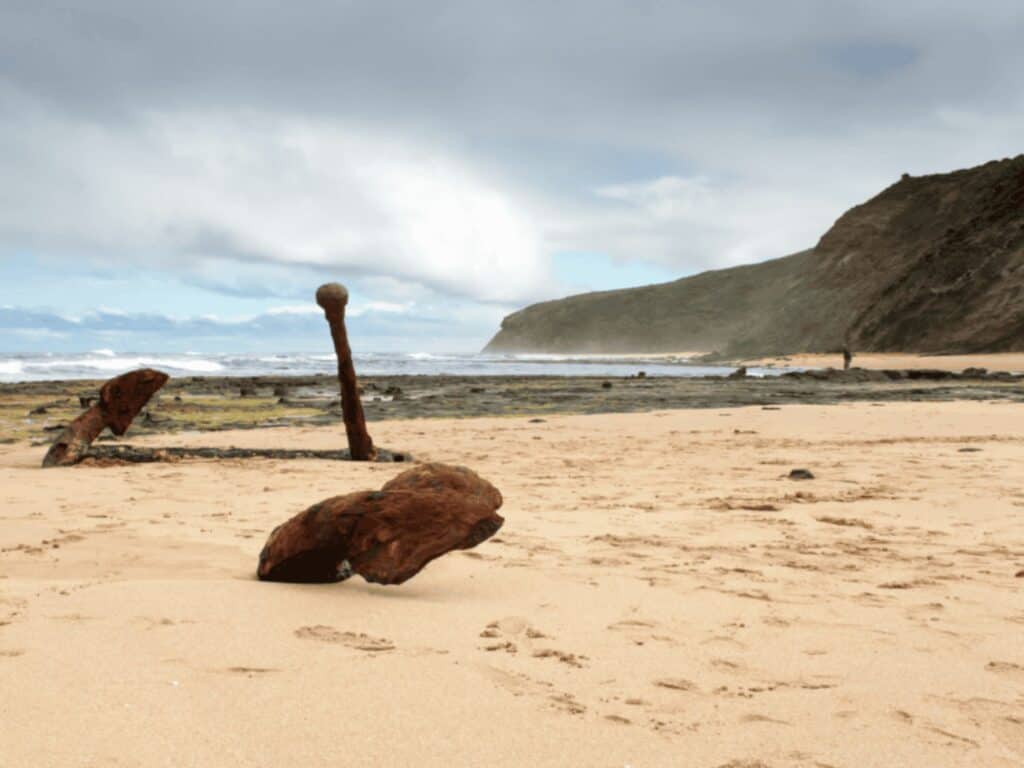
My last full day of hiking took me past Wreck Beach, home to the upturned anchor remnants of the Marie Gabrielle and Fiji wrecks.
As the tide was still high, I decided to take the inland route and rejoin the trail further on. The alternative route is clearly signposted and leads directly to Devil's Kitchen campsite.
You can head towards the beach and take in the view at Gables Lookout, which is pretty spectacular, before backtracking to the inland track.
Note – this is one of Australia's most dangerous stretches of beach – hence the name Wreck Beach. Unless the tide is receding or low, do not attempt to follow the beach access. Use the inland path.
Day 7. Devils Kitchen Campground to Twelve Apostles
Some people have bypassed Devil's Kitchen and gone straight to Princetown for the night before catching the Great Ocean Walk shuttle from the Twelve Apostles Visitors Centre, a 5 km walk from Princetown.
The Great Ocean Walk shuttle leaves the Twelve Apostles Visitors Centre at 10.30 each morning. This means you must leave Devil's Kitchen by at least 5.30am.
This is exactly what I did, along with another couple of hikers who were also in the same boat. The track isn't technical and relatively flat, so it's totally possible to do this section in the dark, wherever you're at in your hiking ability.
I'm glad I stayed the night in Devil's Kitchen. I got to experience packing up real early, before dawn and hot-footing it to meet the bus.
It was exciting, and the sense of accomplishment when arriving at the Twelve Apostles viewing platform was absolutely worth every step. My first thru-hike.
Transport, Accommodation and Logistics
The starting trailhead is Apollo Bay, and the finish is at the 12 Apostles Visitors Center. As with all Point to Point hikes, transport can be problematic. However, it's totally doable and here are your options.
If you are wanting to use your own vehicle, you can leave your car at the 12 Apostles and get shuttled back to where you will be starting. Or you can catch the Great Ocean Walk shuttle back to Apollo Bay.
Great Ocean Walk Parking
The Twelve Apostles car park is not patrolled after hours. Parking may be available at Princetown Recreation Reserve for hikers completing the walk. Confirm with the reserve caretaker before parking there.
This is relatively secure parking, and walkers can also drop their packs off at their cars here before continuing the final 5 km to end at the Twelve Apostles.
Princetown Recreation Reserve caretaker: Call: +61 429 985176


Great Ocean Walk Shuttle
The V/Line Bus Service – which is the official Great Ocean Walk shuttle is operated by Christians Bus Company. The bus departs from the Twelve Apostles Visitors Centre, stopping at Princetown, before arriving at Apollo Bay.
The Great Ocean Walk shuttle leaves at 10.30 am, meaning a very early start from Devils Kitchen Campsite. An alternative option is to stay the final night in Princetown, a 5 km walk from Twelve Apostles Visitors Centre.
Ride With Us is another great family-run business with a shuttle service between the two terminuses and between each section. Advance bookings are required.
Luggage Transfer Service
Ride With Us has a Luggage Transfer Service. Again, advance bookings are required.
Getting There and Away
All major domestic airlines fly into Melbourne Airport.
Melbourne Airport to Apollo Bay:
Gull Bus Service runs a regular service between Melbourne Airport (aka Tullamarine) and Geelong Railway Station.
From Geelong Railway Station to Apollo Bay, you can either catch the VLine Bus or the 101 Public Bus
Avalon Airport near the city of Geelong is serviced by Jetstar. While Avalon Airport is closer, it does require a short taxi ride and tbh, it's a bit of mucking around. Here are your options via Avalon Airport
Where to stay in Apollo Bay
Save Your Pennies
Very Good and Won't Break the Bank
Beachcomber Motel & Apartments
Splash Out
Great Ocean Walk Gear Must Haves
Note: What I took on my first ever multi-day hiking trip and what I carry now are totally different. Not only am I continually researching and upgrading gear, but gear purchases can sometimes be a bit of trial and error, especially when we first start – until we eventually feel we've nailed it.
I am listing what gear I would now take on the Great Ocean Walk if I were to redo the hike tomorrow. I buy a lot of my gear from North America, so for items unavailable in Australia, I have substituted for the closest thing.
Water Filter
Then – MSR Trail Shot Pocket-Sized Water Filter
Now – Katadyn Befree Replacement Cartridge
The – Katadyn Befree Replacement Cartridge fits with the Hydrapack Seeker Soft Water Bottle, which is great for an extra 3 litres of water. I. no longer carry a water bladder, preferring to drink from bottles.


Tent Sleeve Coghlan's Tent Pole Repair Kit
You should consider getting a pack if you've read my post and checked your tent stake bag to find no tent pole sleeve/sheath.
If you are out in the wilderness and your tent pole breaks, you might be in trouble unless you have a backup such as duct tape. This kit is great because it also includes the shock cord, which you will need to replace when you are able to fix your tent. You will only need to take the sleeve/sheath with you.
Duct Tape – Heavy Duty Black Duct Tape
Duct tape has so many repair applications, including a temporary fix of a broken tent pole (use a stick or tent stake as a splint). I've seen people using the tape for emergency repair of boots (the toughness of the tape can hold soles on boots for at least a couple of days), I've repaired eyeglasses and a rip in a tent, and I've seen someone walking out of the Carnarvon Gorge with their shorts taped together. It truly is magic stuff.
I don't carry the entire roll; I wind about 5 metres of the stuff around my hiking poles.
Tent – Big Agnes Copper Spur HV UL1 1-person tent
My go-to tent when on solo hikes is my Big Agnes Copper Spur. It's super easy to put up, and being freestanding, if the weather is gnarly, you can erect the tent under the shelter and then run it outside to peg it out. Big Agnes Copper Spur is super roomy and has space in the vestibule to rest your pack and wet boots and even get your cooker going to make a cup of tea.
Cooker – Jetboil Stash Cooking Pot Camp Stove System
Coffee Plunger – Jetboil Silicone Grande Coffee Press
Talking of tea – or coffee, Jetboil is my preferred cooker because, just like the name suggests, it's super fast to boil a pot of water. Plus, the Jetboil Stash packs up to a small, lightweight unit.
I love my coffee, and the Jetboil Coffee Press fits into the Jetboil saucepan, converting it into a French press. The coffee grounds can just be put down the compostable toilet. There is no need to carry instant!
Clothing Bag – Hyperlite Mountain Gear Stuff Sack Pillow
The Hyperlite Mountain Gear Stuff Sack Pillow is a waterproof clothing bag which keeps your camp clothes clean and dry.
When you've changed into your camp clothes at night, you simply turn the Sack/Pillow inside out and stuff with your non-sleep clothes. You'll notice the inside is nice and soft – and guess what? You have yourself one nice pillow!
Poop Kit
You will need a Poop Kit to practice Leave No Trace Principles. I think “toilet bag” sounds like “toiletry bag”, so I will continue to call it a Poop Kit, which is an Americanism, and used on the trails there.
- Trowel – The Deuce #2 Ultralight Backpacking Trowel
- Toilet Paper – I like to use Who Gives a Crap. I roll up small amounts of paper in “mini-rolls” and carry these in my kit.
- Bags to Pack Out T-Paper – Lux & Bones Eco Poo Bags
- Pee Cloth OR – Kiwi Ultralight Bush Cloth
- Female Urination Device (FUD)* – pStyle – Recycled Ocean Plastic
- Hand Gel – Sea to Summit Hand Sanitiser
- Pouch for toilet stuff – Hilltop Pack Zipper Pouch – Yellow Poop Kit
Rain Jacket (Winter) – North Face Venture 2 Women's Waterproof Jacket
Waterproof Pants – The North Face Antora Women's Waterproof Pants
Weather on the Great Ocean Walk can be very changeable. One day hot and sunny; the next freezing cold. Arriving at camp wet and cold is no fun, let alone hiking wet and cold, as you could end up with hyperthermia. Good waterproofs are essential.
The End of the Great Ocean Walk
The Great Ocean Walk is an Australian hike that is seriously underrated, hiding behind well-known hikes such as The Overland Track or the Larapinta Trail.
It's a perfect hike for beginners and more experienced hikers with the ability to section hike or double up on sections to complete the hike sooner.
The Great Ocean Walk campsites are some of the nicest bush campsites I have vistored in Australia. The maximum number of campsites available also means this hike is never crowded.
The views are to die for, the terrain isn't overly difficult, . Oh – and did I mention there is plenty of iconic Australian wildlife on the trail!!
Like This?
We'd love you to share this great guide!
Other Hikes you May Like


Frequently Asked Questions
How long does it take to do the Great Ocean Walk?
Spanning slightly more than 110 kilometers, the Great Ocean Walk is a point-to-point trek designed to be completed over the course of eight memorable days. Your adventure begins in Apollo Bay and winds through the scenic landscapes of the Great Otway National Park and Port Campbell National Park, culminating at the iconic Twelve Apostles
How difficult is the Great Ocean Walk?
The Great Ocean Walk isn't an incredibly difficult hike but it can feel longer than expected, and weather conditions can slow your pace. It's a best hike for beginners, in that it is rated Grade 3-4, with only two sections being Grade 4. Do some training beforehand and ensure that you bring along the right gear.
Do you have to pay to do the Great Ocean Walk?
No, you do not have to pay to do the Great Ocean Walk. There is no fee, but Great Ocean Walk campsites must be booked and paid for. As there are limited number of campsites available, this determines the number of people on the track at any given time. Book GOW Campsites here
What is the most scenic part of the Great Ocean Road Walk?
The most scenic part of the Great Ocean Walk would have to be the views from the cliff tops along Section 4, Cape Otway to Aire River. The coastline is insanely beautiful and the path hugs the cliff face of the Great Southern Ocean. The trail that passes through the Great Otway National Park is also very beautiful.
Are there toilets on the Great Ocean Walk?
Each Great Ocean Walk campsite has composting toilets. There are also toilets at the Otway Lighthouse kiosk and the Aire River public campsite. For toileting between campsites, adhere to Leave no Trace Principles and bury waste at least 60 m from a water source and 6 inches deep.
Can you do the Great Ocean Walk in 5 days?
Yes you can do the Great Ocean Walk in 5 days. By doubling up on sections 1-2, and 3-4, you skip Elliot Ridge campsite and Cape Otway campsite. You still get the hike the western sections as they are intended which is great as Johanna Beach, Ryans Den and Devils Kitchen, are all great campsites.
What grade is the Great Ocean Walk?
The Great Ocean Walk is considered a Grade 3-4, which is Medium to Hard. The easier sections are closer to Apollo Bay and make great day hikes. The grading of this multi-day walk makes it the best hike for beginners as it has easier sections as well as more difficult and not all one big hard slog.
Where is the start of the Great Ocean Walk?
The full journey of the Great Ocean Walk starts at Apollo Bay, with the trailhead located outside the visitors centre. Apollo Bay is a coastal town in southwestern Victoria, Australia, positioned on the eastern side of Cape Otway and along the renowned Great Ocean Road, within the Colac Otway Shire.
Where does Great Ocean Walk end?
The Great Ocean Walk ends at the 12 Apostles – at the viewing platform. There is an option to walk around the lighthouse grounds, to explore small paths to the lookout points and Rainbow Falls. People who are using the Great Ocean Walk shuttle, will make their way to the 12 Apostles Visitors Centre.
Is there phone reception on the Great Ocean Walk?
There is phone reception but it is intermittent . You might have the most luck with a Telstra SIM due to rural coverage. Coverage is most unpredictable in the Cape Otway area, where the thick forest canopy often interferes with signal strength It is recommended for hikers to regularly check their mobile phones for service availability during their hike.
Where to park a car for a Great Ocean Walk?
Long-term parking for the Great Ocean Walk isn't designated, but you can park at the unmonitored public car parks between Apollo Bay and Marengo. Apollo Bay's Pascoe Street near the backpackers is another option. Be aware that the Twelve Apostles car park isn’t supervised after hours. Princetown Recreation Reserve may also have parking for finishing hikers..