

Hiking Maria Island Tasmania – Discover Abundant Wildlife and Incredible History
To hike the length of Maria Island Tasmania was another bucket list item I was eager to tick off.
Nicknamed “Tasmania's Noah's Ark”, Maria Island, Tasmania is an isolated sanctuary, home to a variety of rare and unusual birds and animals, and literally hundreds of possums, wombats, Tasmanian devils, Cape Barren geese, kangaroos and wallabies.
My fondest memory is walking back late from a hike at dusk, and as we crossed a field, all the marsupials mentioned above were grazing side by side. Oblivious to us humans as we wound our way through them, it was almost like walking through crowds in a crowded station.
For this reason alone, Maria Island Tasmania should be on your radar to visit!
Maria Island Tasmania is full of amazing history, abundant wildlife, gorgeous white sandy beaches, and walks to suit any level of expertise and fitness. Would I go again? Absolutely!
This article may contain affiliate links. If you make a purchase using one of these links, we may receive compensation at no extra cost to you. See our Disclosure Policy for more information.
As well as the abundance of wildlife, Maria Island (pronounced Mariah – as in Mariah Carey) boasts gorgeous deserted beaches, beautiful long walks, and a pretty impressive history from when the island was a penitentiary.
This Maria Island hiking trip took six days, including public transport to Tribunna from Hobart. During our Maria Island Hiking Trip, we walked almost every track on the island, from Grade 1 (Easy) walks, to Grade 4 (Hard) scrambles to summits.
4 Day Maria Island Hiking Trip
Day 1
Mt Maria Walk
Day 2
Bishop and Clerk plus side trip Fossil Cliffs
Darlington to Encampment Cove
Day 3
Encampment Cove to Haunted Bay rtn
Robeys Farm side trip
Day 4
Encampment Cove to Darlington via Painted Cliffs
Maria Island Map and Elevation

Elevation Profile

For an online map of the tracks on Maria Island, I recommend GAIA. Both are GPS enabled app, which allows you to follow the map on your phone. They are more accurate than a street map like Google or Apple Maps.
If you prefer to use a paper maps, the Maria Island Visitors Centre will have maps you can buy of the park. Alternatively, you can visit TASMAP, the Tasmanian Govt Mapping Division for a complete selection of Topographic Maps.
If using paper maps, you will need a compass and know how to use it. If you have not done a navigational course, or need to brush up your skills – I recommend The Columbia River Orienteering Club. They have excellent navigational tutorials on YouTube, as well as tutorials on using GPS systems such as GAIA and similar.
Maria Island Tasmania – Know Before You Go
Fees and registrations for Maria Island Tasmania
Maria Island is a Tasmanian national park. Therefore, a Tasmanian Parks Pass is required before boarding the ferry or arriving on your own vessel. You can purchase a Parks Pass at the ferry terminal, as they won't let you board without one.
Maria Island Hiking Options
There are numerous options for Maria Island hiking, and the non-mountainous trails can also be cycled. Bicycles are available for hire from the ferry company – enquire when booking your ferry.
What to Bring to Maria Island
Maria Island Tasmania is a remote island experience with no shops or cafes.
You will need to bring all your food, drink (other than water), and essentials, such as a hat, warm and waterproof clothing, sunscreen, personal first aid etc. There is a pharmacy and supermarket in Triabunna.
The water on Maria Island must be treated as it's not potable. Lifestraw has a great gravity filter that can accommodate more than one person easily, or the filter can attach to a normal drink bottle for single use.
Best Time to Visit Maria Island
The best time to visit Maria Island would be December through to February, which is the peak season. The days are long and the weather is constantly warm and dry with little rain.
Spring and autumn can also be lovely times to visit with fewer crowds, and during the winter months, you may spot whales from the shore!
Maria Island Hiking Trail Descriptions
Tracks are well maintained and well signposted. The inner mountainous tracks include hiking along ridge lines and boulder scrambling to rocky summits, while the coastal tracks are flat and fairly easy with some beach walking.
Related Posts
What to Pack for a Day Hike
What to Wear When Hiking (Winter and Summer)
What Food to Take on a Day Hike
Water on Maria Island
Water is available at the Mess Hall at the Penitentiary and the campsites at Darlington, Frenches Farm, and Encampment Cove. The water is not potable, and treatment is required. There are a few streams along the hiking trails; however, I can't vouch for the water quality. Even at the Penitentiary, water is scarce, so please practice water-saving principles.
Safety on Maria Island
Maria Island is a safe island. Look out for snakes, and it's always a good idea to carry a snake bandage in your first aid, regardless. Due to the water scarcity, ensure you have enough to keep hydrated, especially for the longer walks.
Dogs
Dogs are not allowed on the island except for assistance dogs. Check with Maria Island PWS for further information.
Maria Island Accommodation
There are two options for Maria Island Accomodation – Camping or the Maria Island Penitentiary. I stayed at the Penitentiary in Darlington, which is now converted to rustic accommodation.
If your'e after an authentic experience, choosing the Penitentiary as your Maria Island accomodation is unforgettable!
But then so is opening the vestibule of your tent and coming face to face with a wombat! Camping at one of the three designated campsites on the island is free, which is what we did on this particular Maria Island hiking trip.
Maria Island Penitentiary
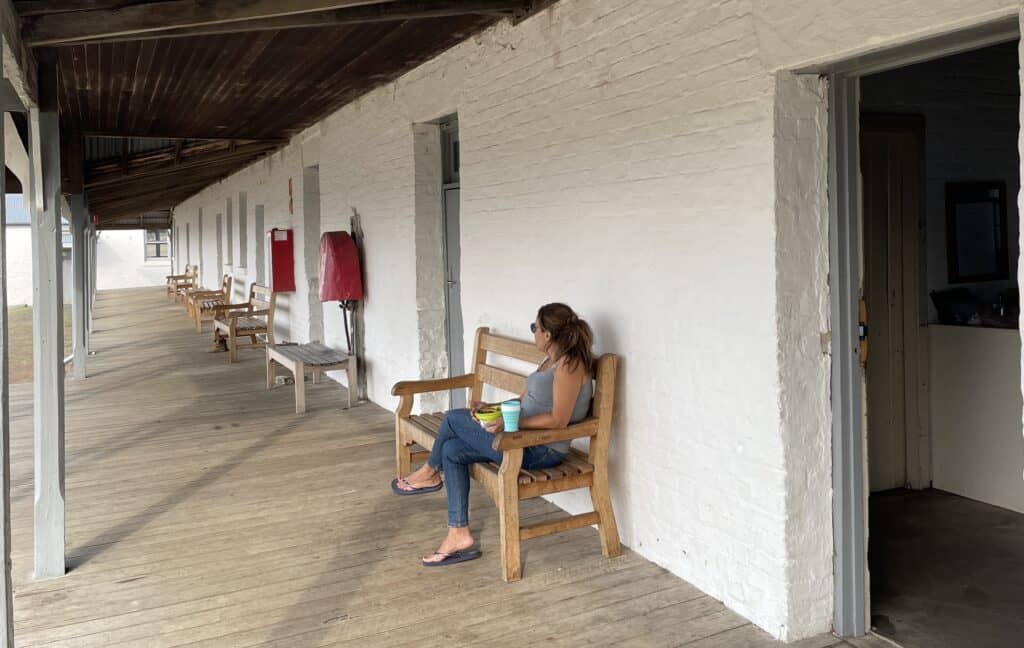
The historic Maria Island Penitentiary originally housed convicts from 1830. Today, it provides basic bunkhouse–style accommodation in 9 rooms with six beds and 1 room with 14 beds.
There are mattresses, but you will have to bring all bedding. Each room has a picnic-style table and chairs, a wood heater (wood supplied) and a food storage box to protect your food against wildlife such as possums.
There is no electricity in the rooms, but in the Mess Hall, which has a kitchen area and outlets to charge your devices. The Mess Hall kitchen has basic cooking equipment but no refrigerator, so if you need to keep food chilled, bring an esky.
There is a toilet block adjacent to the Mess Hall. Due to infrastructure repairs, the showers are inoperable until 2025. Access is 500 metres from the jetty, and there are trolleys at the jetty to assist with luggage transfer.
Bookings can be made six months in advance.$44 AUD per night for two adults. Book Maria Island Penitentiary here
Maria Island Camping – Darlington
Maria Island camping is fantastic and the campsite at Darlington is no exception. The campsite has a large covered shelter with a huge fireplace, free gas BBQ's and loads of table and bench space. There are lockers for your food and also to leave your belongings to lighten your gear for an overnighter further down the island.
The campground is widespread, and there is plenty of room to find a pitch away from other campers. Bookings are not taken, but camping fees are payable at the Maria Island Gateway before you board the ferry.
Tent camping only. $7 AUD for a single person and $13 AUD for two people. Access is 500 metres from the jetty, and there are trolleys at the jetty to assist with luggage transfer.
Maria Island Camping – Encampment Cove
Encampment Cove campsite is a small campground on the shores of Encampment Cove. There are toilets and a water tank with a limited water supply, so please use sparingly. The campsite is 1 km from the convict ruins at Point Lesueur.
Maria Island Camping is free, and there is no booking requirement. Access is a 3.75-hour walk from Darlington.
READ NEXT: Our Complete Guide to Toileting when Hiking
Maria Island Camping – Frenchs Farm
Frenchs Farm campsite is on the grounds of the old farmhouse and provides a toilet and a water tank, which, like all water on Maria Island, is not potable and needs to be treated.
There are plenty of level campsites, and although I did not stay here, another camper said the wildlife at dusk was abundant, and she saw some Tasmanian Devils at night. The farmhouse is a day-use shelter only.
Maria Island Camping is free, and there is no booking requirement. Access is a 3-hour walk from Darlington.
Wombats
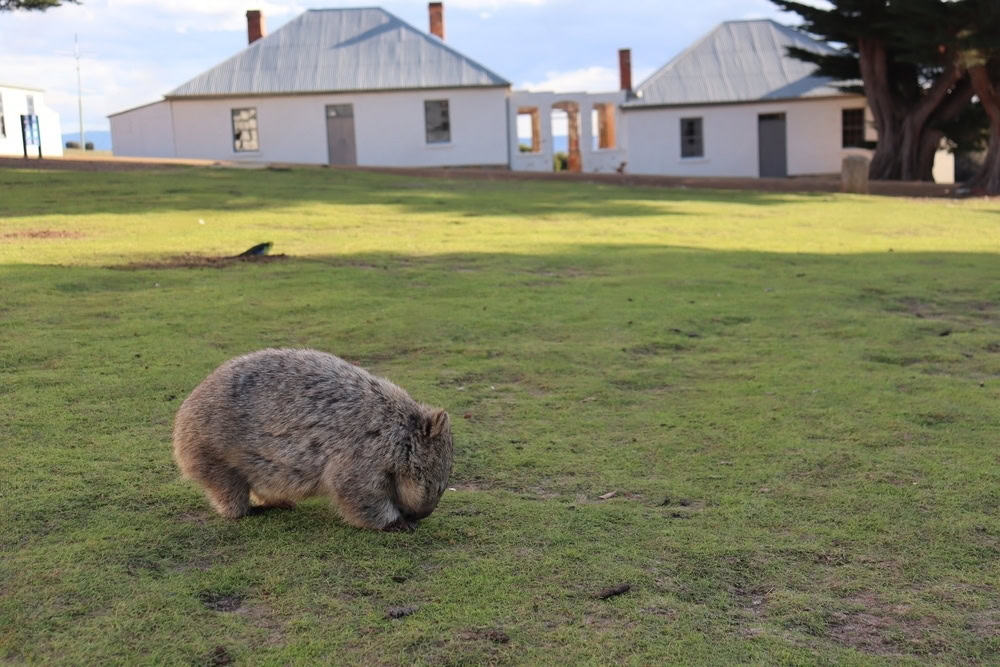
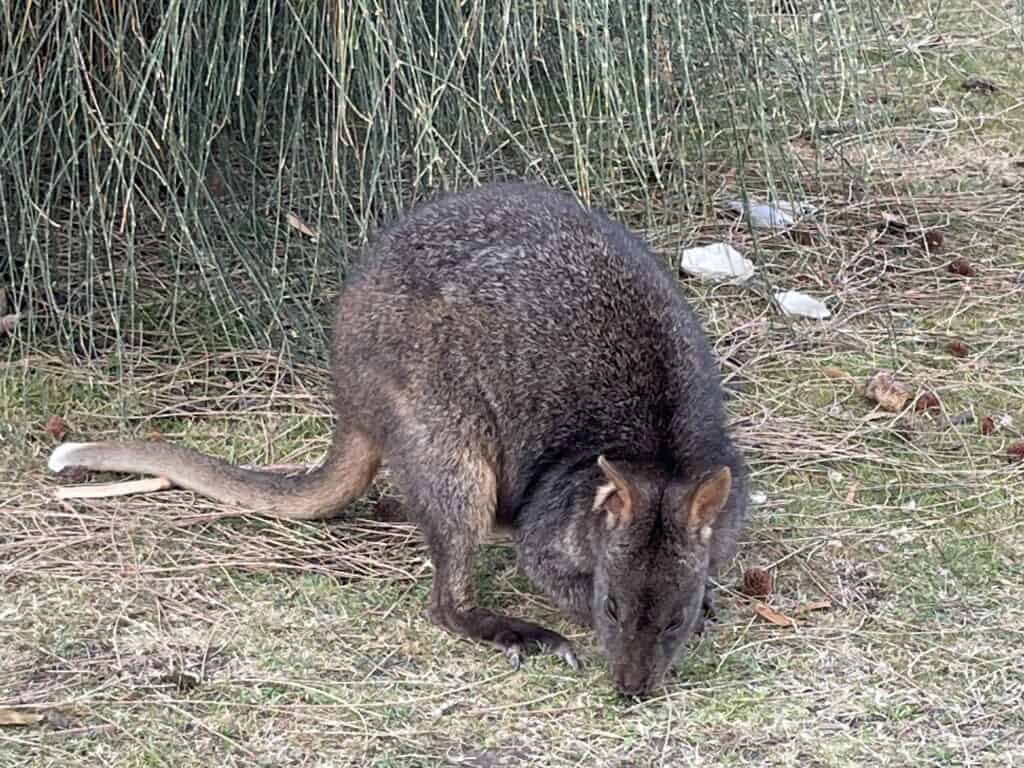
From the moment you step off the dock onto the island, you are greeted by super cute wombats, and not just one or two. There are over 3000 wombats on Maria Island, in constant grazing mode – they are the island's natural lawnmowers.
The wombats are so prolific they're almost a “tripping hazard” and show no signs of fear of humans. However, this is where the problem lies. The wombats are wild animals that don't run away when humans get too close. Many visitors to Maria Island have decided it's OK to chase the wombats with selfie sticks, separate mums from babies, and try to pat and cuddle them.
Please don't. Respect the Wildlife.
How to Get to Maria Island
Maria Island Tasmania is only about 30 minutes by ferry from Triabunna, operated by Encounter Maria Island. The ferry sails to and from the island regularly, and all available sailings are listed when you make a booking.
An adult return on the same day is $52 AUD, while an adult overnight return is $62 and includes 2 x 17kgs luggage allowance. The ferry will also freight over kayaks, bikes and scuba gear. Check the timetable and pricing schedule for more information.
You need to be at the Ferry Terminal 45 minutes before departure so they can check luggage in and ensure everyone has a Parks Pass. They also sell Tasmanian Parks Passes if you still need one.


Transport Hobart to Triabunna
Tassielink operates daily shuttles to Triabunna (which continues to Coles Bay for the Freycinet Circuit), departing Hobart at 4.00 pm and arriving at Triabunna at 5.35 pm. The return departs Triabunna Visitor Center at 10.05 am, arriving in Hobart at 11.45 am. Additional services may be available throughout the summer months. The cost is $16 each way, and concession fares are available.
Encounter Maria Island also has transport between Hobart and Triabunna, departing Hobart at 6.15 am daily and departing Triabunna at 5 pm daily. Cost is $35 each way.

Track Notes from my Maria Island Hiking Trip
Day 1 – Mount Maria Walk
Distance: 16 km / 10 miles (return)
Elevation Gain: 749 m / 2457 ft
Highest Point: 718m / 2355 ft
Duration: 8 hours
Trail Type: Out and Back
Grade: 4 – Hard
We caught the bus from Hobart the day before and stayed the night at the Triabunna Cabin and Caravan Park, allowing us to get the 8.30 am departure.
The 30-minute ferry ride is really lovely. I've done this return trip twice and never had a rough crossing. However, some chemist medication may help if you suffer from seasickness. There is a pharmacy in Triabunna where you can also stock up on sunscreen or anything else you may have forgotten.
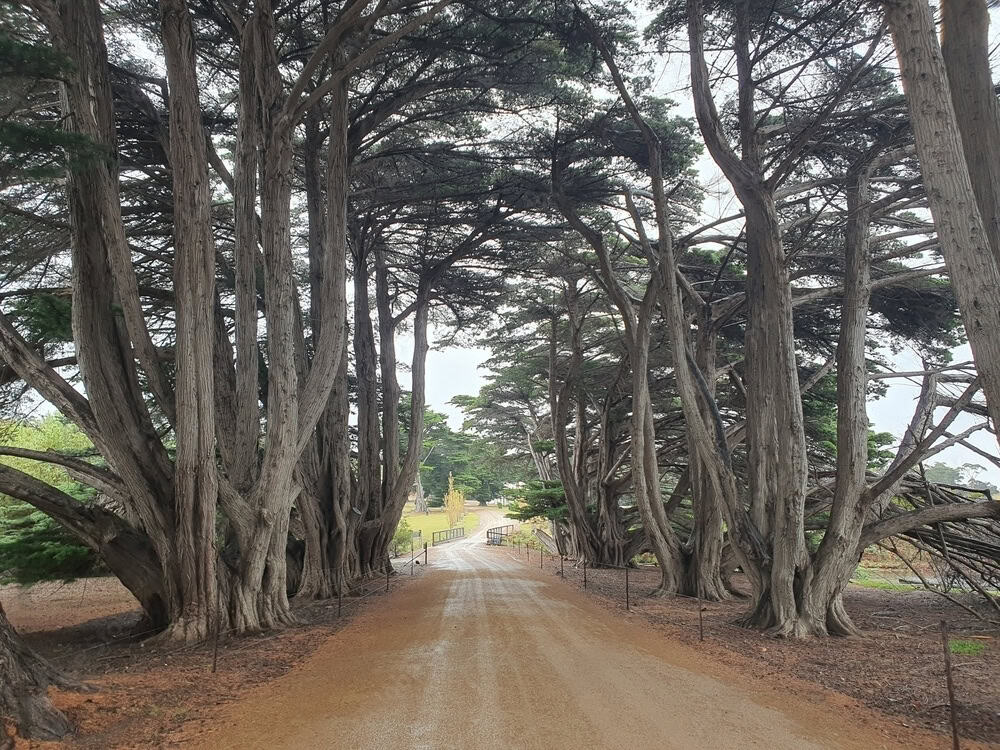
Once the ferry docks at Darlington on Maria Island, if you have excess luggage, you can grab one of the trolleys to help move your luggage and food to the Penitentiary or the Darlington campsite.
As you disembark, you get this sense of history – not just the convict ruins but the knowledge that this island was inhabited for more than 40,000 years by the Puthikwilayti people, the traditional custodians of the land and surrounding waters.

Like This?
We'd love you to share this great guide!
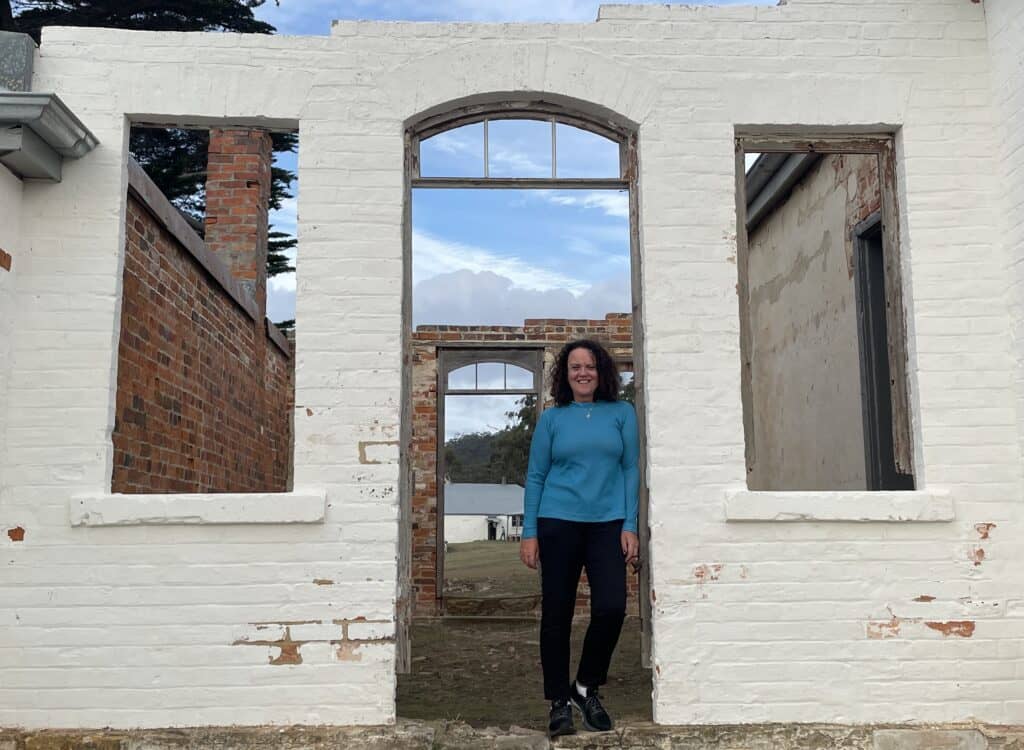
There's also the sense of sadness as you witness the convict ruins. The settlement of Darlington held reoffending convicts sentenced to hard labour. It is the most intact example of a convict probation station in Australia.
As it was still relatively early, we made a cup of tea, had a snack and stored our luggage in the laundry at the Penitentiary before heading off for the Mount Maria Walk.
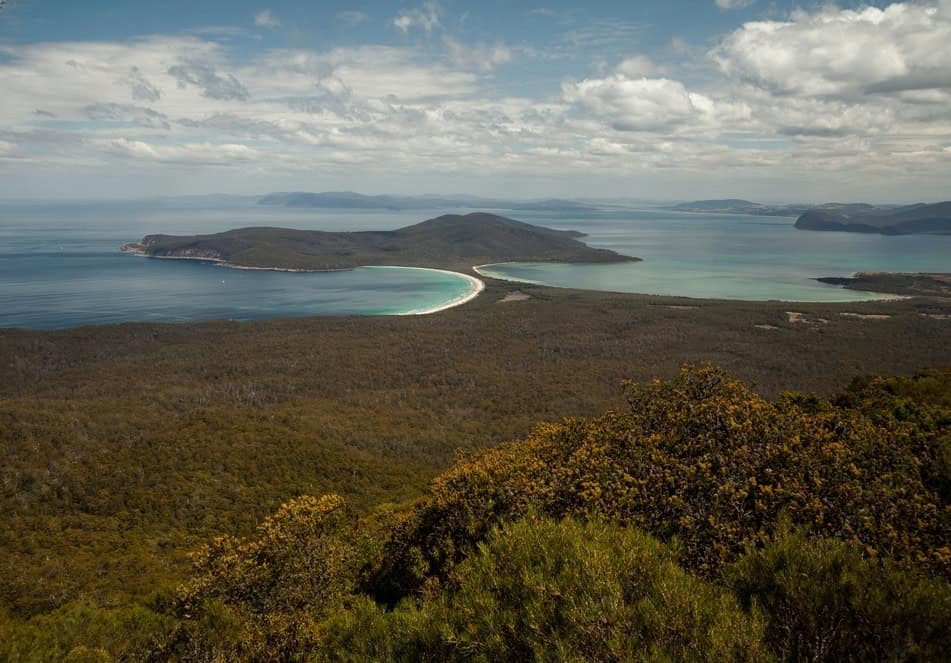
The Tasmania Parks Website puts this walk at Grade 4, but due to the boulder hopping up the top of the summit, it's easily a Grade 5 and quite difficult if you don't have the upper body strength for the climb. Please don't attempt this if wet, as the boulders could be extremely slippery.
We stayed the night at the Darlington Campsite, which has a lovely big shelter with gas BBQs and a nice warm fire- wood provided.
Get To Know Maria Island
When you first get off the ferry at Maria Island, you will see four large concrete silos and a couple of buildings to the right. The second building is the visitor's centre, where you can read about Maria Island's interesting history, talk to the helpful staff and check out a large island diorama. You can pick up some maps of the island here as well.
Day 2 – Bishop and Clerk (return) followed by Darlington to Encampment Cove Campsite
Hike 1
Bishop and Clerk
Distance: 12 km / 7.45 miles (return)
Elevation Gain: 665 m / 2182 ft
Highest Point: 718m / 2355 ft
Duration: 5 hours
Trail Type: Out and Back
Grade: 4
Hike 2
Darlington to Frenchs Farm Campsite
Distance: 10 km / 6.2 miles (return)
Elevation Gain: 144 m / 472 ft
Highest Point: 41m / 134 ft
Duration: 2.5 hours
Trail Type: Point to point.
Grade: 3
Hike 3
Convict Cells Track
Distance: 6.9 km / 4.3 miles (return)
Elevation Gain: 60 m / 197 ft
Highest Point: 27m / 88 ft
Duration: 1.5 hours
Trail Type: Circuit
Grade: 3
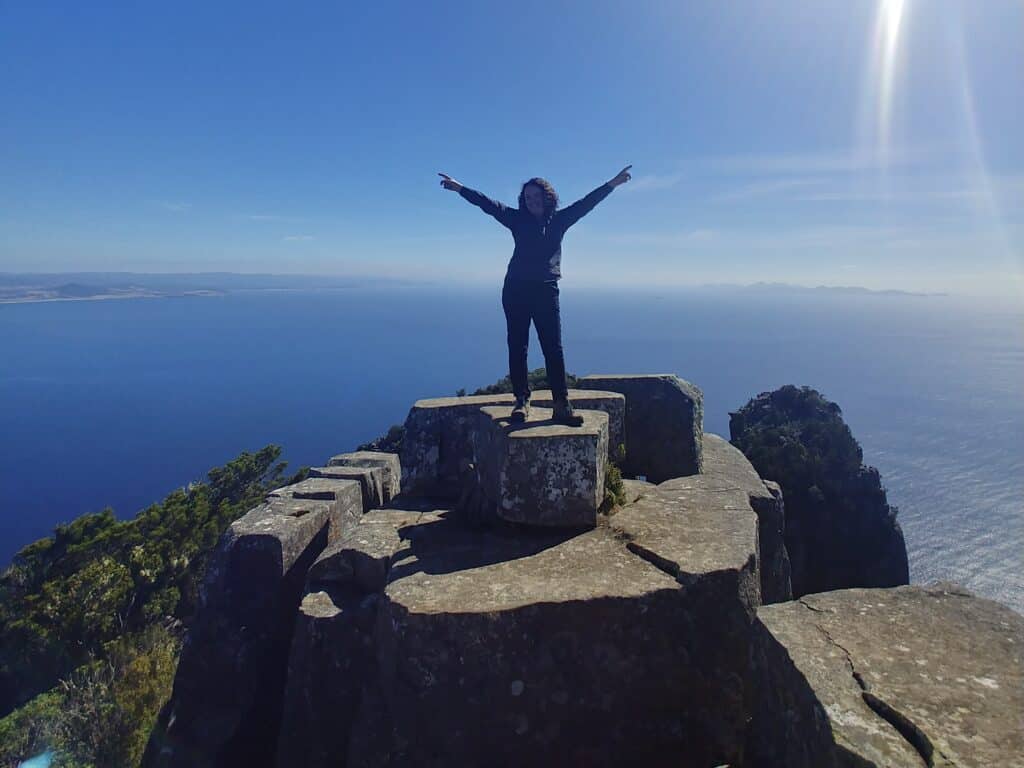
Today, we started early and after coffee, breakfast and packing up, we headed out to the Bishop and Clerk Trail. We hiked the inland route to Fossil Bay and then veered right along the path towards Bishop and Clerk. It's well signposted.
The walk goes through bush before becoming steeper and rockier before reaching the scree and boulders. The high point involves getting yourself up an extensive field of rock boulders and hauling yourself up steep sections and is best suited to experienced walkers.
One final section of exposed dolerite blocks near the summit requires skill and confidence to make it up. I admit I did need help with this last bit.

Pack Light, Pack Right – Free Interactive Checklists
No More Overpacking. No More Forgetting Essentials.
Our free interactive packing lists help you pack methodically and remember everything. Add notes, quantities, save or print, and share with hiking partners so everyone knows what’s covered and what they need. Works on any device.
Available for multi-day wilderness camping, hut-to-hut hikes, and inn-to-inn walks, with new lists added frequently.
The views from the summit are truly magnificent. It really was wow factor. Getting down that particularly tricky section, I also needed help, and this is only suited as a solo hike if you have the upper body strength.
We returned via the Fossil Cliffs and arrived back at camp for a quick lunch. Being hikers, we didn't have anything heavy to leave at Darlington while we headed south for two nights, so we donned our backpacks and headed down to Frenchs Farm.
Frenchs Farm becomes flooded with wildlife at dusk, including the wombats who literally came right up to our tents but totally ignored us!
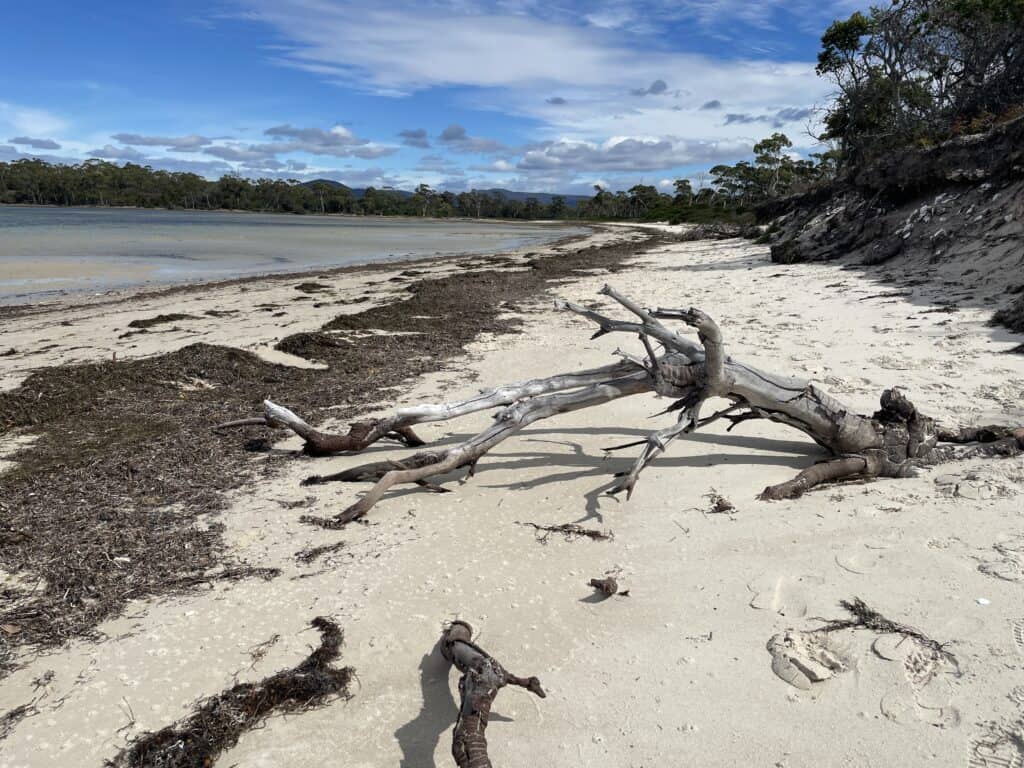
There are no toilets or clean water sources after leaving Frenchs Farm, so it's imperative to practice LNT Principles – especially when toileting.
If there are no toilets provided, you need to dig a hole for your “faecal waste” (poo) and pack out toilet paper. If you have to dig a hole, ensure it's at least 15cm deep, 100m from any water source, and cover it back up when you're done. You should still pack out toilet paper, sanitary pads, and tampons because they don't biodegrade. See my Poop Kit and what I take on a hike.
Day 3 – Frenchs Farm to Haunted Bay with a Side Trip to Robeys Farm and Point Lesueur.
Distance: 38 km / 23.5 miles (return)
Elevation Gain: 409 m / 1342 ft
Highest Point: 221m / 725 ft
Duration: 9 hours
Trail Type: Out and Back
Grade: 3
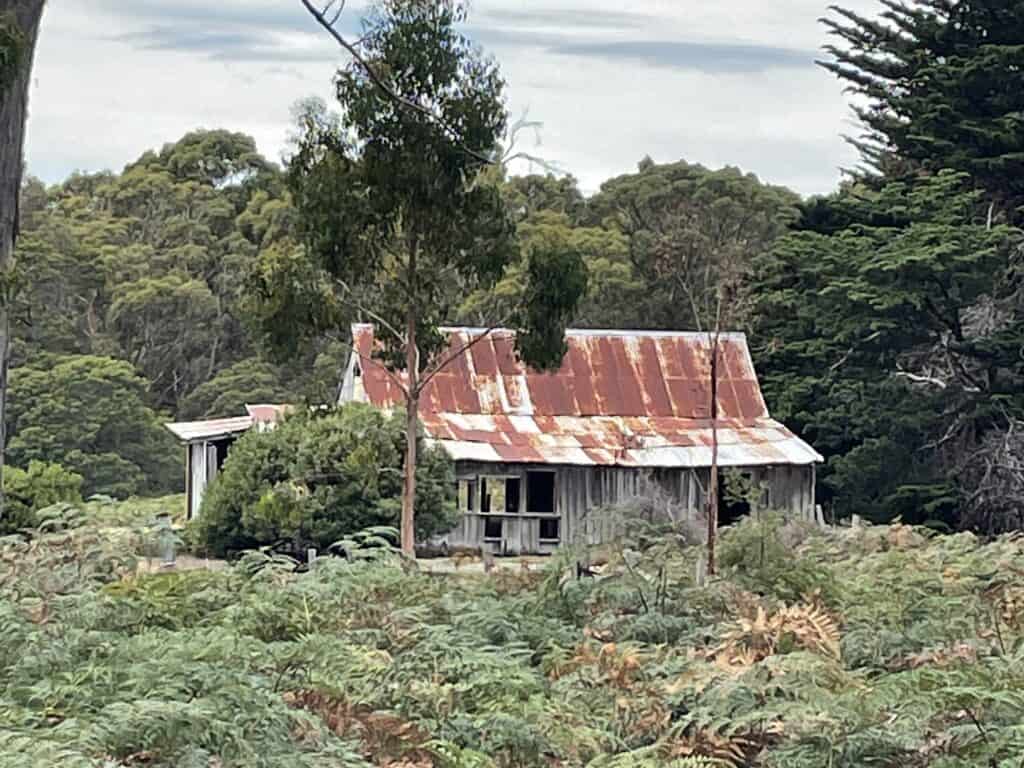
We wanted an early start as it was promising to be a hot day. There are a few streams further south on the island, but the water quality was questionable.
I used my Sea to Summit Ultra-Sil Day Pack, which has proved invaluable for all my hiking trips where I've needed to ditch my pack for a side trip. I also filled up my 3L Hydrapak with fresh water and my 1L Nalgene – in total, I was carrying 4L of water.
READ NEXT: The Essential Guide to Hiking in the Heat Safely
Although it wasn't far, there was little shade along the way, and the temperatures were going to soar mid-morning. Happy we could leave our tent and luggage and carry the lighter load, we set off for Haunted Bay.
Walking across the isthmus was a little hard due to the soft sand, but it certainly wasn't as bad as some of the reports we'd read. The waters to the east of the isthmus were a brilliant azure blue, and the entire bay was absolutely stunning.
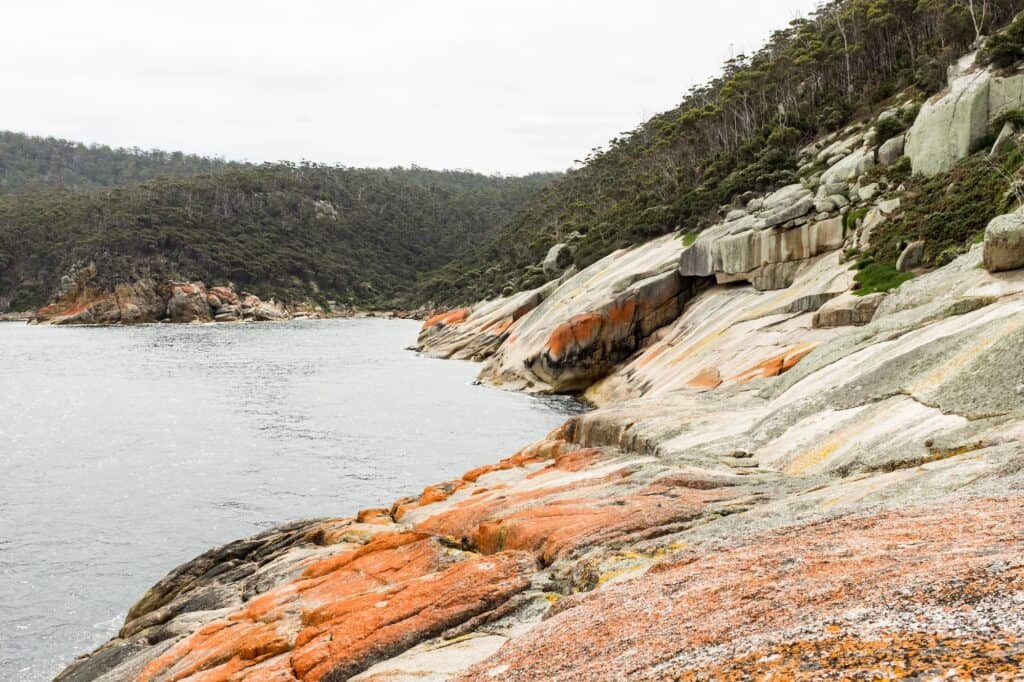
We made Haunted Bay by lunch and, on the return journey, took the westerly track just before the isthmus, which headed to Robey's Farm.
Once past the isthmus, we took the western track to Encampment Cove and walked out to the Long Point Probation Station at Point Lesueur.
Check out my Full Gear List for Overnight Hikes
Day 4 – Frenchs Farm Darlington via Painted Cliffs
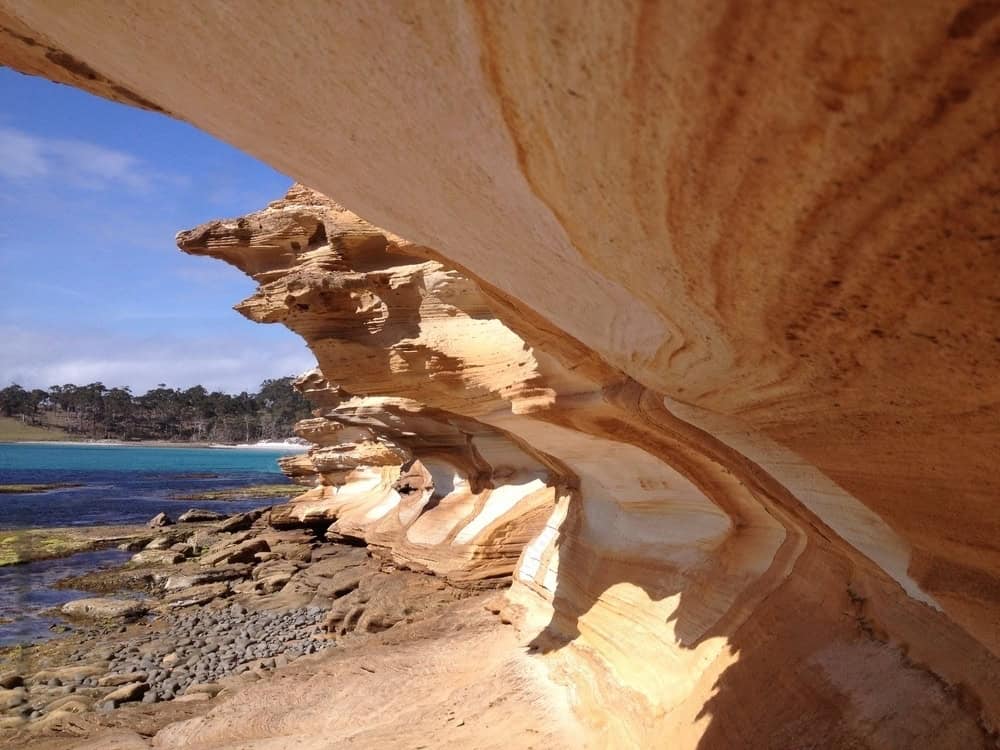
After yesterday's massive effort, we had a slow start and almost missed the 2.30 ferry. We stopped via the Painted Cliffs, but it was high tide when we arrived, so the Painted Cliffs will have to wait for another day!
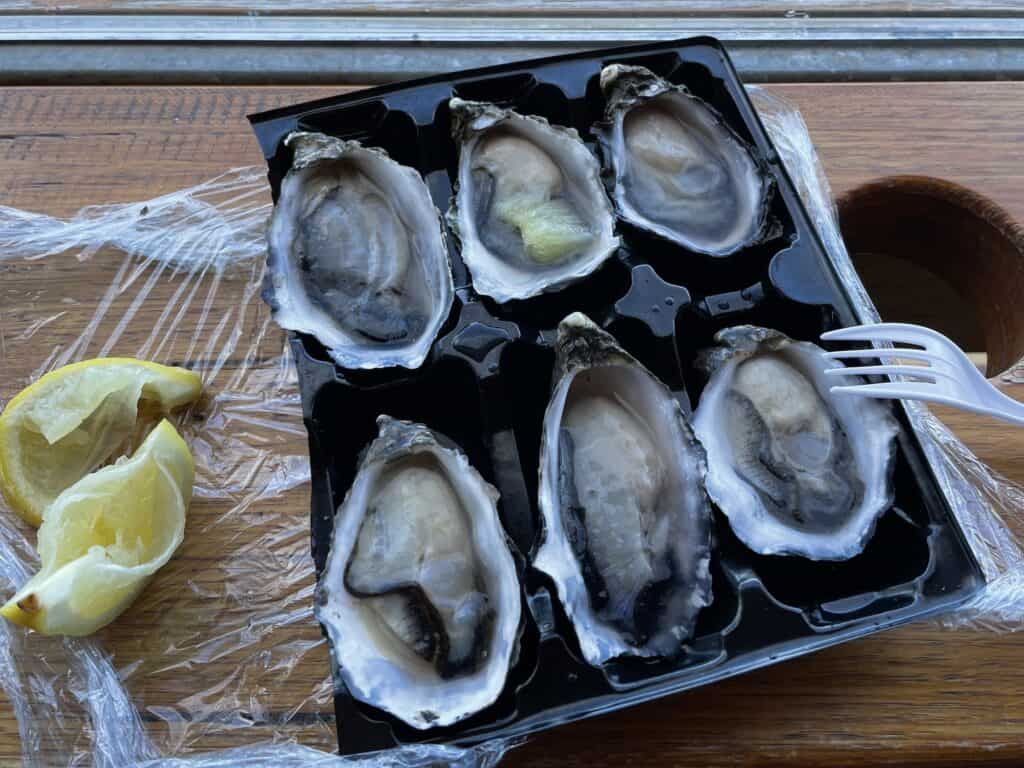
The return ferry journey has a capped number of passengers, and changing your ticket is subject to availability, so ensure you leave yourself plenty of time. And if you're an oyster lover, the oysters at the fish shack opposite the ferry terminal are phenomenal!
Final Thoughts on Maria Island Tasmania
Maria Island Tasmania has something for everybody – young and old. It's a beautiful, peaceful island with insane wildlife and gorgeous beaches. All the hikes can be modified to suit hiking ability, and non-hikers or those with young children will have a fantastic time just walking around Darlington.
Like This?
We'd love you to share this great guide!
If You Enjoyed this Guide. – You May Also Like:
- Navigating the Overland Track Solo
- Hiking Frenchmans Cap -Tasmania’s Iconic White Peak
- Hiking the Rees Dart Track – Mt Aspiring National Park
- The Rakiura Track – A Great Walk on Stewart Island
- Traverse Walls of Jerusalem to the Overland Track via Lees Paddock
- Hiking The Tahoe Rim Trail – A Guide for Overseas Visitors
- Conquering the Gold Coast Kokoda Challenge
- Plan Your Larapinta Trail Sections, Best Time of Year, Resupply, and Transfers
- Larapinta Trail Food Essentials and Nutrition Plan


Frequently Asked Questions
Is it worth going to Maria Island?
Yes, it is worthwhile to visit Maria Island for a unique blend of history, wildlife, and natural beauty. Perfect for wildlife enthusiasts, it offers encounters with Tasmanian devils and other native animals. The island's historic ruins and stunning landscapes provide a serene backdrop for hikers and history buffs seeking a peaceful retreat amidst Tasmania's rich heritage.
Why is Maria Island famous?
Maria Island is famous for its unique combination of natural beauty, wildlife, and history. It is a sanctuary for rare wildlife, and offers visitors the chance to experience animals in their natural habitat. The island is also known for its historical significance, featuring well-preserved convict settlements. It offers a variety of outdoor activities, like hiking, biking, and exploring pristine beaches.
How long is the ferry ride to Maria Island?
The ferry ride to Maria Island from Tasmania's mainland, specifically from the town of Triabunna, typically takes around 30 minutes. However, this duration can vary depending on weather conditions and the specific ferry service provider's schedule. It's always a good idea to check the latest timetable and weather conditions before planning your trip.
How do I get into Maria Island?
To visit Maria Island, take a 30-minute ferry from Triabunna, accessible by a 1.5-hour drive from Hobart. Book the ferry in advance, especially during peak seasons, and prepare for a trip without shops or services by bringing necessary supplies. The island, a car-free natural paradise, offers an immersive experience amongst its historical sites and diverse wildlife.
Can you stay overnight on Maria Island?
Yes, you can stay overnight on Maria Island. Accommodation options include camping at designated campsites and staying in the old penitentiary buildings that have been converted into basic bunkhouse-style accommodation. You must bring all necessary supplies with you, including food, as there are no commercial facilities on the island. Advance bookings, particularly for the penitentiary accommodation, are highly recommended.
Is Maria Island a day trip?
Maria Island can indeed be visited as a day trip, and the convenient ferry connections allow for a full day on the island. However, with its rich history, diverse wildlife, and various walks and beaches, some visitors may prefer to stay overnight to experience all that the island has to offer without feeling rushed.
Can you swim in Maria Island?
Yes, you can swim on Maria Island. The island boasts several beautiful beaches with clear waters that are generally safe for swimming. However, Tasmanian waters can be quite cool, so be prepared for lower temperatures, even in summer. Also be mindful of potential hazards such as strong currents or marine life. There are no lifeguards on duty on the island.
Does Maria Island have toilets?
Yes, Maria Island has toilet facilities at the main camping areas and near some of the historic sites, like the Darlington precinct. Always plan ahead and be aware of where these facilities are located, especially if you're venturing further afield, since amenities are limited. It's also essential to practice leave no trace principles to preserve the natural environment.
Are there kangaroos on Maria Island?
Yes, there are kangaroos on Maria Island. The island is particularly well-known for its population of Forester kangaroos, which are the largest marsupial in Tasmania and can commonly be seen grazing around the grassy areas near Darlington and throughout the island. Visitors often enjoy the opportunity to see these and other wildlife species in their natural habitat.
Can you live on Maria Island?
No, you cannot live on Maria House as a permanent resident. The island is a protected National Park aimed at conservation, heritage preservation, and tourism. While overnight stays are possible, they're intended for short-term accommodation in campsites or the converted penitentiary bunkhouse for visitors. Regulations are in place to maintain the island's pristine environment and wildlife habitats.
Can you walk around Maria Island?
Yes, walking is a primary way to explore Maria Island, with its car-free policy enhancing the experience. Various trails cater to all fitness levels, from leisurely strolls to the multi-day Maria Island Walk. These paths offer encounters with rich wildlife and historic sites within the island's serene landscape. Remember to check trail conditions and prepare accordingly.
Where to see wombats in Maria Island?
On Maria Island, wombats are prevalent and can be seen in the grassy areas surrounding the Darlington precinct. The island has a healthy wombat population, and as they are generally not too wary of humans. Sightings are common, particularly at dawn and dusk when they are most active. You can spot them walking along the trails and within the campgrounds.
Are there platypuses on Maria Island?
Platypuses are not naturally found on Maria Island. While platypuses are native to Tasmania, they typically inhabit freshwater rivers, lakes, and streams on the Tasmanian mainland. Maria Island, being offshore and lacking the fresh running water systems that platypuses prefer, does not have an environment suitable for sustaining a platypus population.
Are there showers on Maria Island?
Yes, there are showers on Maria Island, but facilities are basic. Showers can be found at the old Penitentiary in Darlington, which is near the main camping area. These showers are cold, as there is no hot water available. Visitors should be prepared for a rustic experience and remember to bring environmentally friendly soap to minimise impact on the environment.
Is Maria Island good for kids?
Maria Island is great for kids, providing a safe, car-free environment rich in wildlife and history. Kids can spot wombats, kangaroos, and explore convict ruins. The island's beaches offer additional fun. Planning is key, as amenities are scarce; bring essentials to cater to your children's needs during the visit. It's an outdoor classroom and playground rolled into one.
Do you need a bike on Maria Island?
A bike is not a necessity on Maria Island, but it can enhance your experience by allowing you to cover more ground quickly. Many visitors enjoy cycling as it's an efficient way to explore the various sites across the island, including remote beaches and lookouts which are further afield. If you decide not to bring or rent a bike, all the main attractions are still accessible by foot; it just means you'll need more time and effort to reach them.
Can you take your own boat to Maria Island?
Taking your own boat to Maria Island is possible, but important regulations and conditions apply. You should verify permits, adhere to Marine Reserve rules, and use public moorings where available. Always prioritize environmental care and safety. Check with Tasmania Parks and Wildlife Service and maritime authorities for updated guidelines and ensure your vessel is well-equipped for the Tasmanian waters.
How difficult is the Maria Island walk?
The Maria Island Walk is a moderate four-day, 30-kilometre trek, suitable for those with average fitness. It encompasses varied terrain but is typically taken at a leisurely pace, allowing for enjoyment of the island's array of landscapes and wildlife. It's important to factor in personal fitness and stamina, as the walk involves several hours of walking daily.
How do I get to Maria Island Painted Cliffs?
To visit the Painted Cliffs on Maria Island, take the ferry from Triabunna and arrive at Darlington. From there, it's a leisurely 45-minute to an hour walk to the cliffs. Timing is key; visit during low tide for the best access and views. The cliffs' layered sandstone patterns, colored by iron oxide, offer an impressive backdrop for visitors.
What is the indigenous name for Maria Island?
The indigenous name for Maria Island is “Toarra-Marra-Monah,” given by the traditional owners, the Puthikwilayti people of the Tyreddeme band of the Oyster Bay tribe. The island holds significant cultural importance for the Aboriginal community, and its rich history, including thousands of years of Aboriginal presence, is an important aspect of its heritage alongside its natural and colonial history.
How many devils are on Maria Island?
As of April 2023, Maria Island hosts a managed population of Tasmanian devils, originally established with 15 individuals in 2012 as a conservation initiative. The population has grown, but the exact numbers vary. The program aims to maintain ecological balance while protecting the devils from the mainland's Devil Facial Tumour Disease. For current numbers, consult the latest Tasmanian government or conservation reports.
What is killing Tasmanian devils?
Tasmanian devils have been severely affected by a transmissible cancer known as Devil Facial Tumour Disease (DFTD). DFTD is a fatal condition that causes large lumps to form around the face and mouth, interfering with feeding and eventually leading to death by starvation or organ failure. The disease spreads among devils through biting, which can occur during social interactions and mating.
What are the Cape Barren Geese on Maria Island?
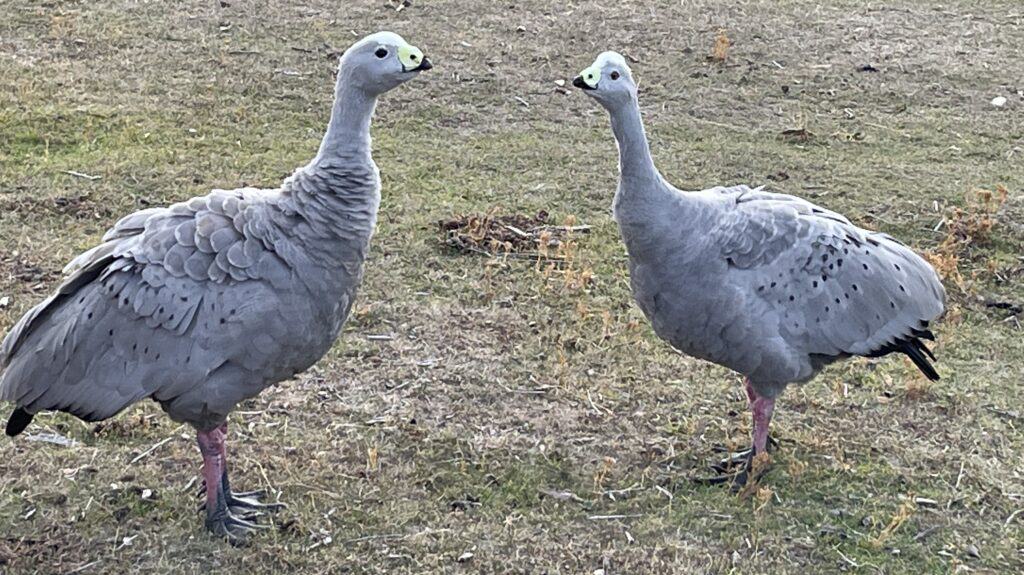
Cape Barren geese are a distinctive feature of Maria Island, recognisable by their pale grey plumage, green beaks, and pink legs. Thriving due to conservation efforts, they graze on the island's grassy areas. The island serves as a safe haven for these geese, contributing to their rebound from near-threatened status to a stable population.
What to do if you see a Tasmanian devil?
If you encounter a Tasmanian devil in the wild, stay calm and maintain a safe distance to observe them quietly. Avoid loud noises and sudden movements, respecting their natural behavior. Refrain from feeding them and follow park guidelines to ensure their well-being and your safety. Appreciate the moment while preserving the wildlife and their habitat.