

Traverse Walls of Jerusalem to the Overland Track via Lees Paddock
The Walls of Jerusalem had always been an attraction – quite possibly, the fanciful biblical names of the many landmarks within the park fascinated me.
I'd enquired about the park, and was met with knowing looks, a sigh, and some comment that resembled “It's magical”. It was almost like it was some sort of secret club!
The Walls of Jerusalem National Park doesn't have an official walk per se, but a variety of options, including a circuit. Most people do a 2-3 day circuit; however, I was looking for a hike that would last at least 8 days, and I didn't want to exclude the park on account of the duration of the hike. So, I got my thinking cap on.
Neighbouring the Walls of Jerusalem National Park is the Cradle Mountain-Lake St Clair National Park, home to the iconic Overland Track.
I'd heard about a track that entered Cradle Mountain-Lake St Clair National Park from the Walls of Jerusalem, so with the two park maps in front of me, I followed the trails, working out the best route.
My original plan was to hike through on the famed Never-Never trail, hitting the Overland Track just before Du Cane gap at Hartnett Falls, but I wanted to climb Mt Ossa, having missed it during my hike of the Overland Track a year earlier. As the Overland Track cannot be hiked South to North during the high season, this option wouldn't work.
Many people are under the impression that the Overland Track is one of the only hikes in the Cradle Mountain-Lake St Clair National Park. However, the park contains many hiking trails, countless wild camping sites alongside stunning picturesque lakes, rustic huts still in use today and several entry points into the park!
Unlike the Walls of Jerusalem and the Franklin-Gordon Wild Rivers National Park, which contains the iconic Frenchmans Cap hike, you don't have to book any of the hikes in Cradle Mountain, except for the Overland Track.
Can you hike the Overland Track without paying? Technically no. However, you can enter the Overland Track via Lees Paddock on the Arm River Track, and you are officially allowed to stay at Pelion Hut for 2 nights, allowing you time to summit Mt Ossa.
We eventually decided on the following itinerary, with a few ad hoc changes we made along the way. The joy of taking off on an unofficial hike is that you can take each day as it comes.
This article may contain affiliate links. If you make a purchase using one of these links, we may receive compensation at no extra cost to you. See our Disclosure Policy for more information.
Our Itinerary of Walls of Jerusalem to the Overland Track via Lees Paddock
For Detailed Track Notes, head to Walls of Jerusalem to Overland Track via Lees Paddock – Track Notes
|
Route |
National Park |
Length |
|---|---|---|
|
Mersey Forest Rd WOJ Trailhead to Trappers Hut |
Walls Of Jerusalem NP |
2.5 km /1.55 mi |
|
Trappers Hut to Dixons Kingdom Campground |
Walls Of Jerusalem NP |
8.5 km /5.28 mi |
|
Dixons Kingdom to Lake Meston Campground |
Walls Of Jerusalem NP |
13.77 km /8.55 mi |
|
Lake Meston Campground to to Pine Plain Hut |
Walls Of Jerusalem NP |
16.83 km /10.45 mi |
|
Pine Plain Hut to New Pelion Hut (Overland Track via Lees Paddock) |
Cradle Mountain-Lake St Clair NP |
17.16 km /11 mi |
|
New Pelion Hut – Mt Ossa to Paddy Hartnett Track |
Cradle Mountain-Lake St Clair NP |
16.8 km / 10.45 mi |
|
Paddy Hartnett Track to Pine Valley Hut |
Cradle Mountain-Lake St Clair NP |
21.5 km / 13.35 mi |
|
Pine Valley Hut – Labyrinth Lookout Rtn |
Cradle Mountain-Lake St Clair NP |
25 km /16.1 mi |
|
Pine Valley Hut – Narcissus Hut – Ferry to Cynthia Bay |
Cradle Mountain-Lake St Clair NP |
9.71 km / 6.03 mi |
Map of Walls of Jerusalem to the Overland Track via Lees Paddock
The best place to get paper maps of all national parks in Tasmania is from TASMAPS. They have a great selection and it's nice to support a local business. The maps I used were:
Cradle Mountain-Lake St Clair National Park
Walls Of Jerusalem National Park
The maps show all of the trails within the National Parks, however it's good practice to take a compass (along with the knowledge to use it). I do recommend taking a navigational course. Just like First Aid, navigation is a good skill to have.
Emergency Assistance
If you’re hiking solo in remote areas, a satellite communication device is really important. Should something go wrong and you can’t call for help, triggering your beacon will alert Australian Search and Rescue that you need assistance.
I carry the RescueMe PLB1, a compact Personal Locator Beacon (PLB) that, once activated, notifies the Australian Maritime Safety Authority. From there, they coordinate with the nearest Search and Rescue team to get help to your location—fast.
SAR Cover is always a good idea, and I use and recommend Overwatch x Rescue. It includes helicopter rescue and repatriation to your home hospital, should you need it. For what it offers, it’s extremely well priced—and far more competitive than anything else out there. Please use my code SOUL15 for a 15% discount.


Know Before You Go
Fees and Registrations for Tasmanian Parks
You will need a Tasmanian Parks Pass to enter Walls of Jerusalem National Park, and one Parks Pass covers you for all national parks in the state. If you plan to return to Tasmania or regularly visit Tasmanian parks, an annual pass might be better value
Our hike combined two national parks – Walls Of Jerusalem National Park and Cradle Mountain-Lake St Clair National Park.
Get your Tasmanian Parks Pass here
We spent 3 nights in the Walls Of Jerusalem National Park before crossing the border into Cradle Mountain-Lake St Clair National Park at Pine Plain Hut (not to be confused with Pine Valley Hut)
The Walls of Jerusalem requires advance bookings if staying overnight.
There is no fee for the bookings, and once you are in the national park, you are free to camp at any designated campsites or wild camp in the many picturesque spots available, as well as take as long as you like in the park.
Cradle Mountain-Lake St Clair does not require advance bookings with the exception of the Overland Track.
Options and Direction
Once you open a map (or maps) of both national parks, you can see how extensive your options are. The only things stopping you are your supply of food and the weather. Water on the track is plentiful.
Supply and Resupply
There is no place to purchase food or gas within either park, nor the border between the parks. Supplies for your entire hike will need to be brought in. As we arrived in Launceston after 5 pm on Boxing Day, we asked our ride to pick up some gas for us.

Share-Worthy, In Every Way
Tasmania delivers. All they need is this link.
Best time to Hike
The best time to hike the Walls Of Jerusalem National Park and Cradle Mountain-Lake St Clair National Park is during the summer months. However, autumn (fall) is spectacular with the Turning of the Fagus. These parks are in alpine Tasmania, and sudden changes in weather, including snow in January, can and did happen to us. You will need to be prepared for all weather.
Our Full Track Notes tell the story of snow and using an emergency hut on Boxing Day!
Route Description
The trails in the main areas of both parks are clearly defined and include unformed tracks along with boardwalk over eco-sensitive areas. Once you get off the beaten track, the trail may appear overgrown, and some bush bashing or navigation may be required. If you are climbing Mt Ossa, rock scrambling is required.
Water Sources
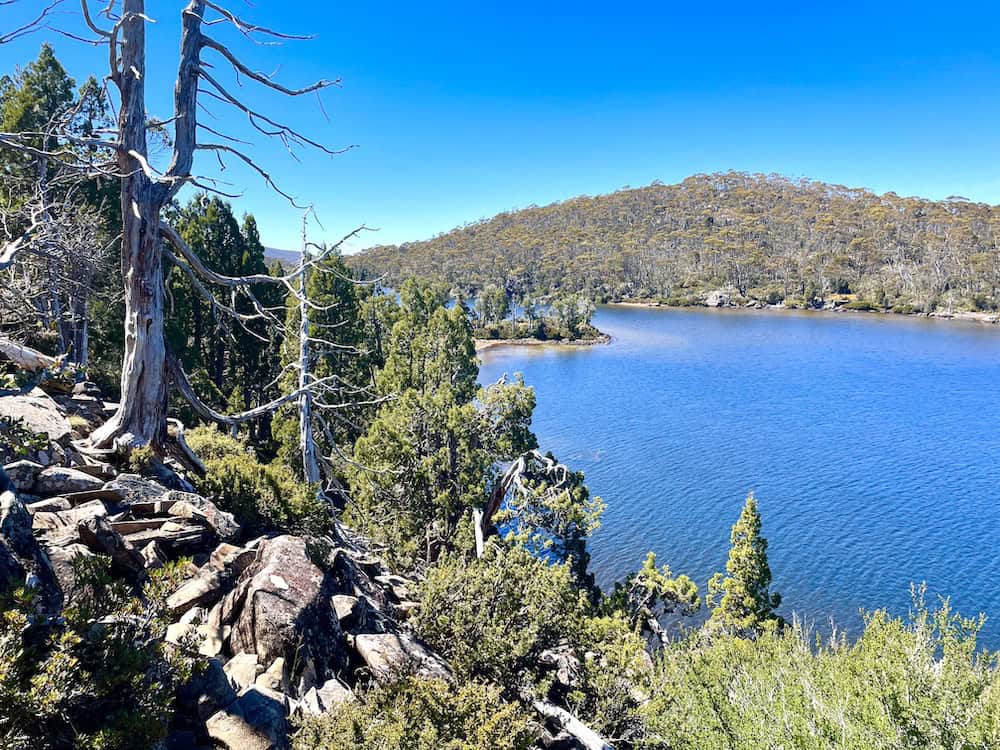
Water is plentiful along all of the tracks we took, especially the streams running through Walls of Jerusalem. The streams that run like channels across the park are actually called “runnels”. They are plentiful, and the water is crustal clear and delicious!
Lees Paddock is pastural farmland, so water treatment is important when passing through this farmland.
New Pelion Hut has water tanks, and I recommend treating the Overland Track hut water, as the water tanks rely on rainwater from the roofs, and many possums hang around the huts looking for food scraps.
Once in the parks, there are rivers, streams and lakes galore with lovely spring water.

Safety
The most dangerous aspect of Tasmanian parks in alpine regions is sudden weather change, catching hikers unaware. Make good choices and be ready to bring out your tent to shelter if the weather turns nasty. There are several huts that can be used as emergency shelters; however, these may not be in your immediate vicinity if needed.
Snakes in Australia
Snakes pose a threat, but only if stepped on or intimidated. Australian snakes know we are too big to eat and would rather bolt than have to face us. If you do get a bite, often the snake will give a dry, warning bite – they don't want to waste venom on something they can't eat if they don't have to.
Australian snakes bite into the lymphatic system, so treatment differs from other parts of the world. You need to put a compression bandage on the affected limb. How to Bandage a Snake Bite
Dogs and Drones
Dogs and drones are not allowed in Tasmanian National Parks
Trail Accommodation
There is no fee to book campsites in both parks and spots are available on a first come, first served basis. You cannot stay in huts on the Overland Track without an Overland Track Permit, with the exception of New Pelion Hut.


Camping in the Walls of Jerusalem National Park
Wild Dog Campsite
Wooden platform tent sites
Water Tanks (tanks are fed by Wild Dog Creek, not rainwater)
Toilets
Dixons Kingdom Campsite
Large grassy area for tents
Dixons Kingdom historical hut is for emergency use on
Toilets
Water Tanks
Lake Adelaide Campsite
Grassy area for tent
Toilets
Water Tanks
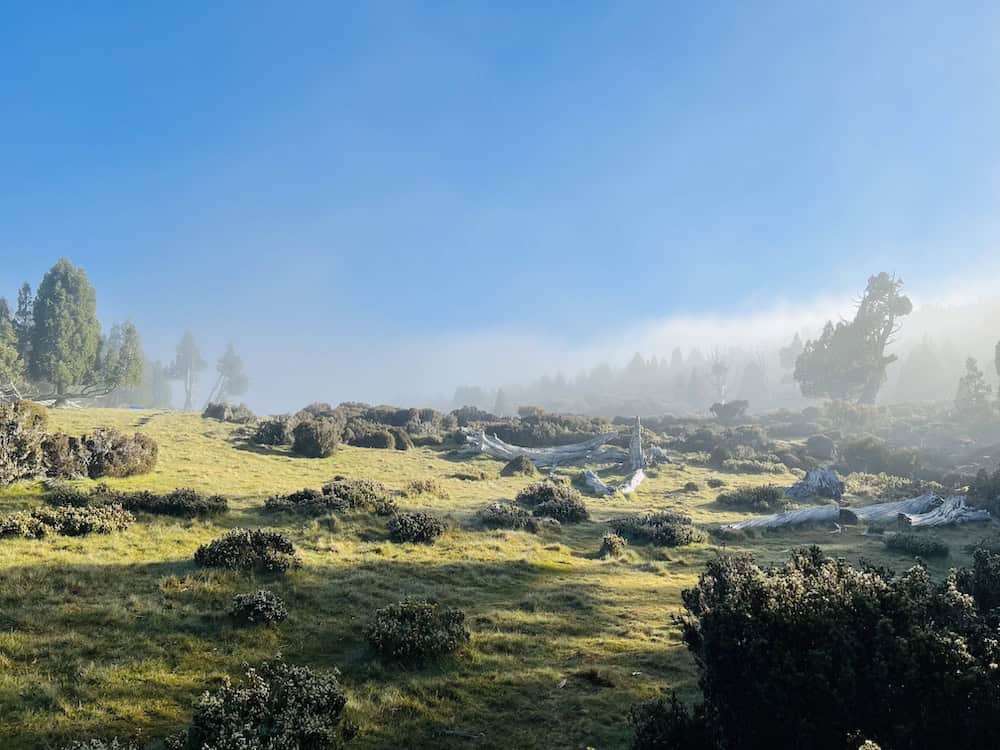
Wild Camping in the Walls Of Jerusalem National Park
You can pitch a tent anywhere in the park except between Herod's Gate and Damascus Gate, including the Pool of Bethesda area.
There are several designated camping sites on the map; however, there are no amenities such as toilets or tank water (they are mostly situated next to a natural water source). There is no fee to book these campsites.
There are several wooden structured backcountry huts throughout the park which have no amenities and are for emergency use only. It's always a good idea to look at the map (or GAIA) and familiarise yourself with their whereabouts.

Camping in the Cradle Mountain Lake St Clair National Park
New Pelion Hut
Pelion Hut on the Overland Track is open to hikers coming across from Arm River Track or Lees Paddock Track, and you are allowed to stay 2 nights. There is no fee or need to book, and you can use all the hut facilities, including sleeping in the hut
Pine Valley Hut
Pine Valley Hut towards Lake St Clair is a rustic hut similar to the older style huts on The Overland. It has a lovely large verandah around the hut where hikers congregate.
There are wooden platforms for tents, as well as flat sites on the ground among the trees. Pine Valley Hut also has toilets and a water tank.
Pine Valley Hut is the base for hiking the Acropolis or the Labyrinth.


Lees Paddock Hut
Lees Paddock Hut is located on a block of private farmland within the national park. It's a lovely rustic one-room hut with a wood-burning fire, water tank and bunk beds with mattresses. At the time of writing, there was a sign warning hikers that if the hut continued to be disrespected and left unclean, the owners would have no option but to cease allowing the public to use it. You need the owner's permission to stay in the hut or camp in the area around the hut.
To contact the owners for camping or staying at Lees Paddock:
Judy Kilby 0439 334 663
Grant Evans 0408 133 421

Pine Plain Hut
Pine Plain Hut is not to be confused with Pine Valley Hut, and refers to a disused hut at the Mersey Forest Road entrance to the park. There is a lovely camping area on the banks of the Mersey River. The river is downstream from Lees Paddock (with livestock), so the water needs to be treated. There are no toilets or other amenities.
Wild Camping in Cradle Mountain-Lake St Clair National Park
As well as the huts and camping spots above, numerous backcountry huts (historic wooden shelters) are dotted within the park and many dispersed camping sites. Some camping sites are indicated on the map; otherwise, find a nice flat area next to a picturesque little lake or stream and enjoy the wilderness!


Highlights of the Walls of Jerusalem to Overland Track via Lees Paddock
For the full track notes on this fantastic 9-day hike, visit Hiking the Walls of Jerusalem to the Overland Track – Track Notes.
Trappers Hut
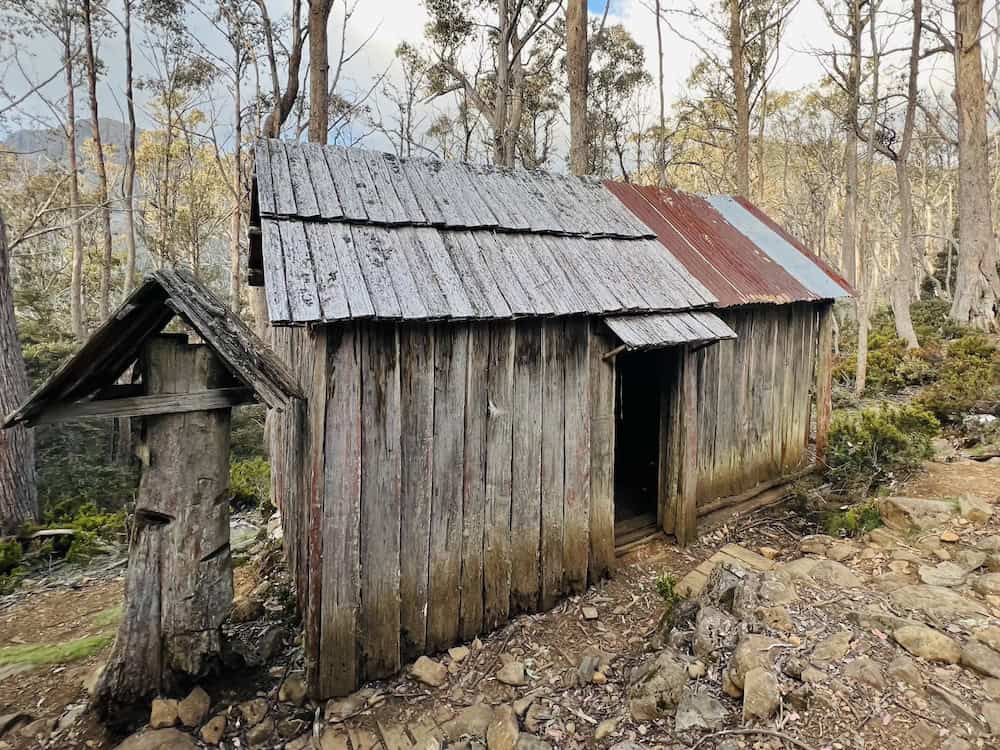
Walls of Jerusalem National Park. I can still remember hiking past huts such as Du Cane or Kitchen Hut on the Overland Track, imagining having to stop in the dead of winter as it just got too cold.
Well, it doesn't need to be “dead of winter”, and snow can and does happen on Boxing Day (26 December). Bunking down in an old historic hut in an emergency was a highlight!
Solomons Throne, The Temple and Mt Jerusalem
Walls of Jerusalem National Park. We summited Solomons Throne, The Temple and Mt Jerusalem all in one afternoon. The views from each summit were amazing; you could see for miles. And the glittering tarns on Mt Jerusalem sparkled like jewels.
Solomons Throne
1.2 km / 0.75 mi return – 115 m / 377 ft – 40 mins
This short, steep climb gives you some of the best views in the Walls of Jerusalem. The rocks are placed into “stairs”, and there's a little negotiating through scree at the top.
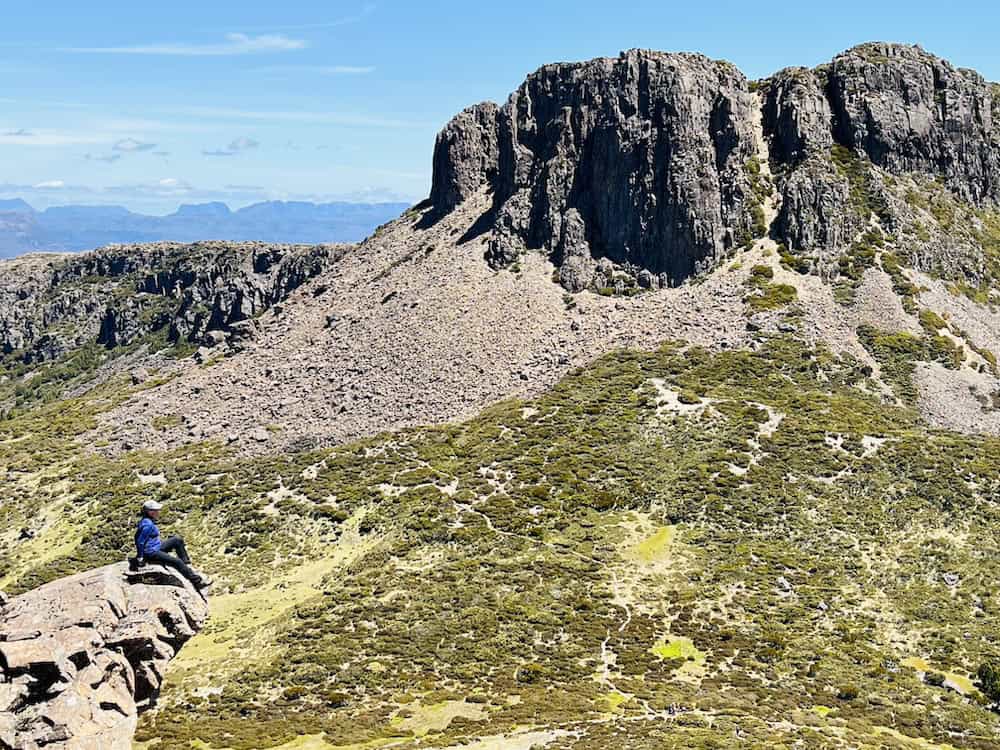
The Temple
1 km / 0.62 mi return – 110 m /360 ft – 40 mins
The wonder of The Temple is the fantastic view of the Walls from Solomons Throne all the way to King David's Peak. There are some great ledges to sit, have a snack, and take in the moment.
Mt Jerusalem
4.5 km / 2.7 mi return – 185 m /607 ft – 1.5 hours
Although Mt Jerusalem has more elevation gain than the other climbs mentioned, it has a moderate grade, so it's pretty easy. The view takes in the thousands of tiny tarns sprinkled throughout the park.

Lake Meston
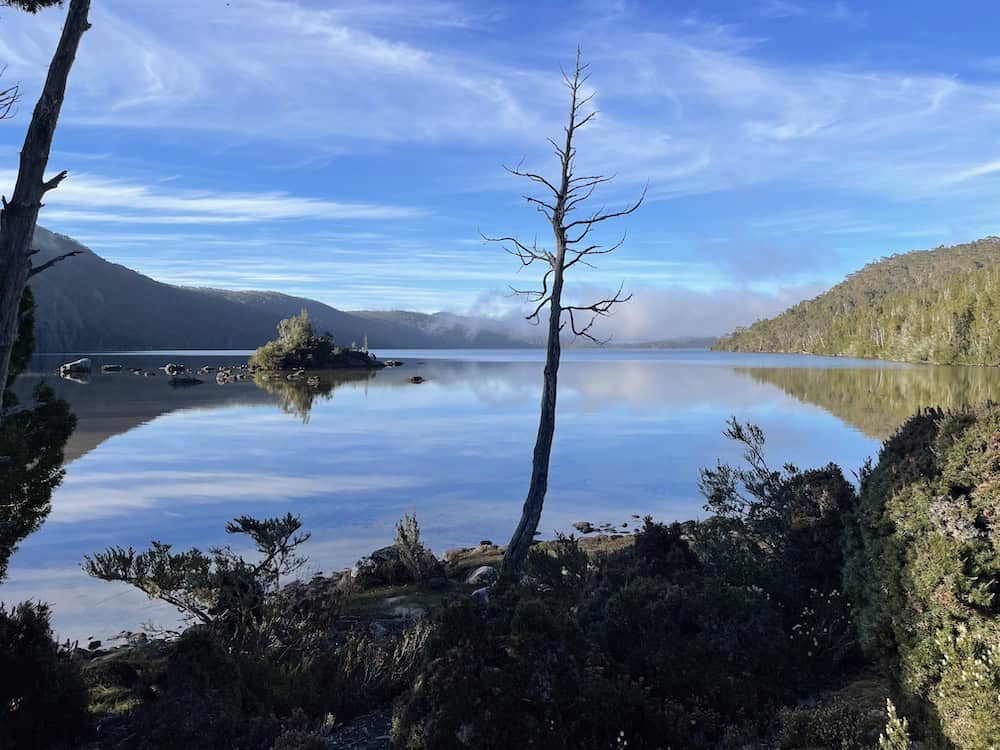
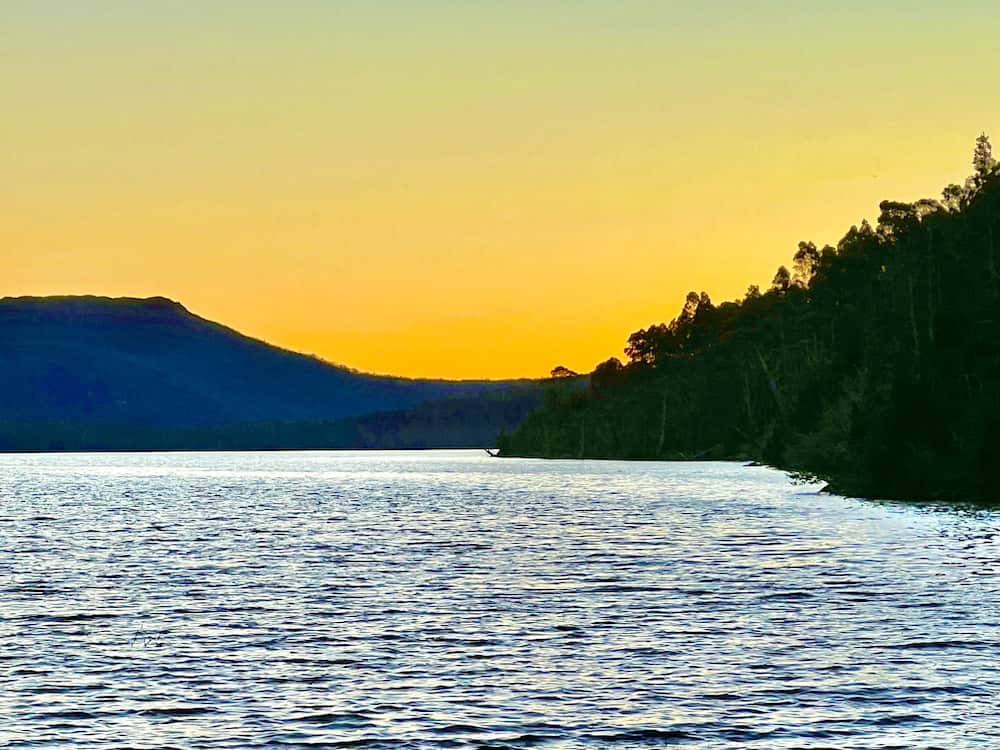
Walls of Jerusalem National Park. Any other campsite on the shores of a lake in Australia on the 27 December would have been packed with campers. We were the only hikers and campers for miles and were able to skinny dip in the cool lake after a hot day of bashing through the bush on Lake Adelaide. We had a show-stopping light display for dusk as we sat on our little private beach and ate dinner.

Too Good Not to Share
Give someone the heads-up on a trail worth flying for.
Camping by the Mersey River
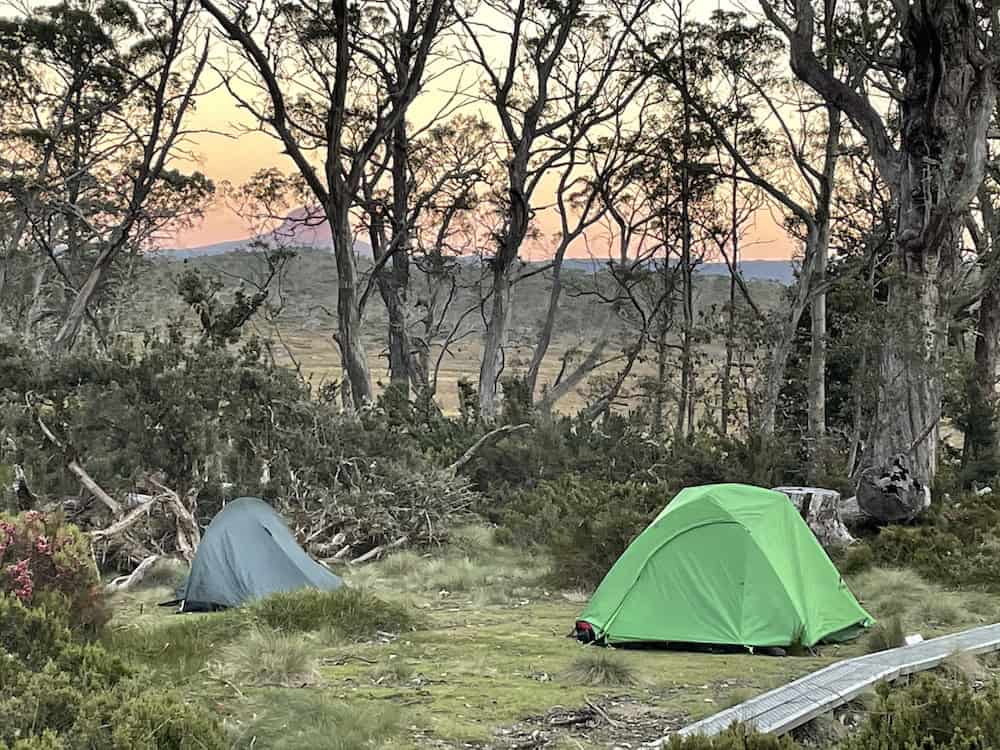
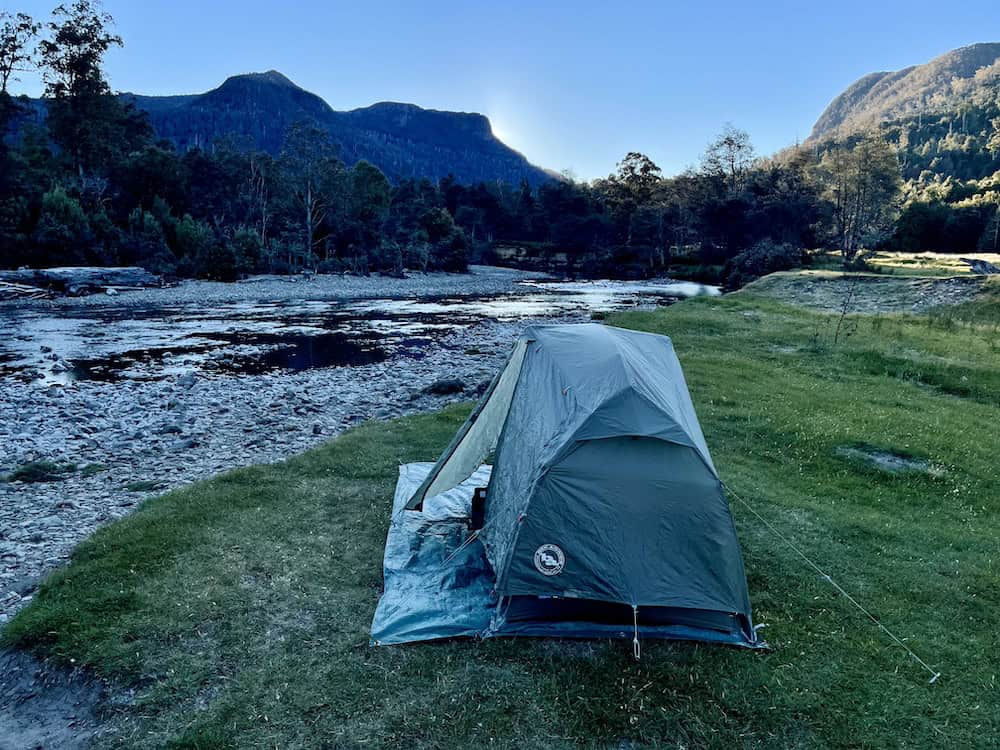
The banks of the Mersey River at Pine Hut Creek is a gorgeous grassy camping area with some logs strewn around for seating. The burble of the river is the only sound you hear in this peaceful little utopia. Again, we were the only ones there, so we really lucked out. The next morning, I went for a dawn walk, and the light was just magical.
New and Old Pelion Huts
As nice as the newer huts on the Overland Track are, Pelion Hut remains my favourite of all the Overland Track huts. Perhaps it's the ultra-wide verandah with the outstanding views of Mt. Oakleigh or the fact that the hut has character and charm. Regardless, it was lovely to return and spend another night there. Even if it has stinky dunny!

Old Pelion Hut is one of my favourite backcountry huts. Built in 1917 to house the manager of a copper mine on Pelion Plains, Old Pelion Hut is now used only for emergency accommodation. Over the last century, Old Pelion Hut has provided shelter to recreational hikers, trappers walking between their snares and cattle drovers.
Walking into the hut, you get a real sense of history, and you can imagine the 1000's of walkers who have used this hut. There's a brilliant copy of a visitor book you can look through and see all the entries from days gone by. It's definitely worth a visit.

Climbing Mt Ossa
I mentioned in my post on the Overland Track that climbing Mt Ossa is like a right of passage for Overlanders. However, Mt Ossa is a difficult climb towards the summit, and many newbies are hiking the Overland Track as their first hike.
There's a saying in the hiking community: “Hike Your Own Hike”, which means hike to your ability or in a way you enjoy. I didn't feel capable of climbing Mt Ossa a year earlier, so I climbed Mt Pelion East, which gave me insane views over Mt Ossa. It was a win, after all.
The highlight of climbing Mt Ossa this time round was acknowledging just how far I'd come in my hiking ability within a year.
Du Cane Hut
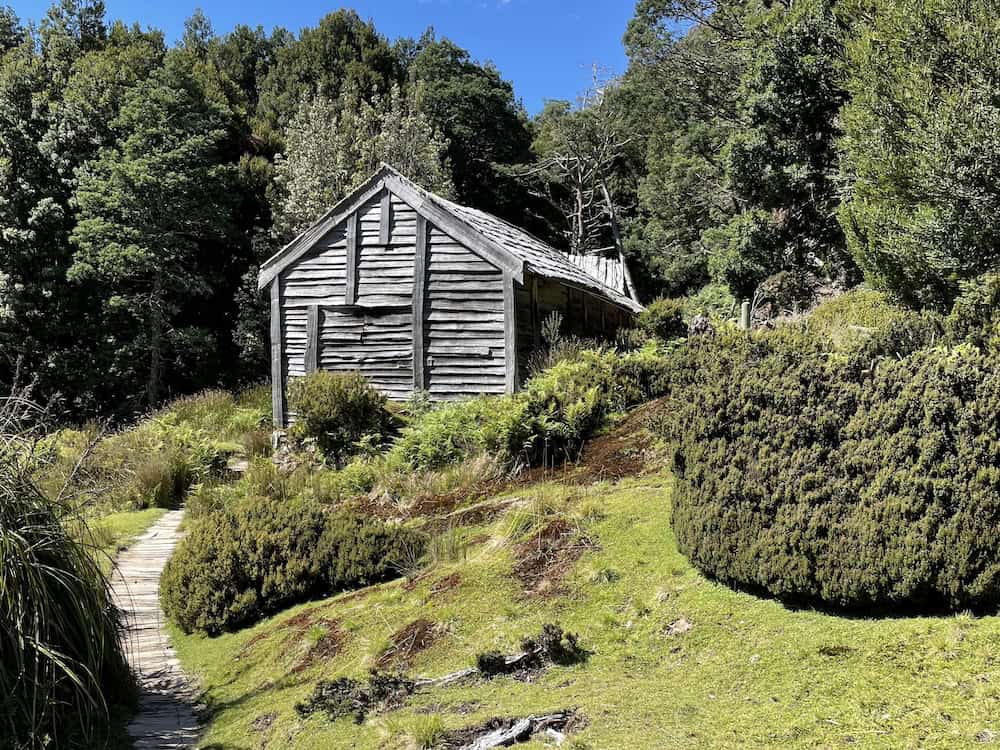
Du Cane's claim to fame is that it's the oldest structure on the Overland Track. Built in 1910 by ‘Paddy' Hartnett, who led some of the earliest multi-day guided walks on what has become the Overland Track, the picturesque Du Cane Hut sits in a small clearing with a pencil pine forest backdrop.
Pine Valley Hut
I'd bypassed Pine Valley Hut the previous year, so this was an excellent opportunity to visit this popular hut. Just 5kms off the Overland Track, it's a lovely undulating walk to Pine Valley through the forest. When you arrive at Pine Valley Hut, you immediately feel the difference between this hut and the Overland huts.
The older-style hut is set among the trees, with tent sites and wooden platforms scattered along Cephissus Creek. The other visitors are mainly local Tasmanians and a mixed bunch; some are rock climbers arriving with all their ropes and other gear, some are there to hike the Labyrinth or the Acropolypse, while others have just hiked in from Narcissus to stay at the hut and chill for a day or so.

Continue Your Hike to Frenchmans Cap
If you want to hike Frenchmans Cap, the Hobart bus stops at the Derwent Bridge Hotel en route to the Frenchmans Cap trailhead. Potentially, you could drop a resupply box off at the hotel if you wanted to go down this route.
Your only problem would be gas, and your options are either making up full canisters from the array of canisters people leave when finishing up the Overland Track – use a Flip-Fuel to combine all the half-used canisters, or ask Wild Island Adventures if they can bring you some fresh supplies.
Transport and Logistics for The Walls of Jerusalem National Park
The Walls of Jerusalem National Park – Transport
Private Car or Private Driver
Logistically, getting to The Walls of Jerusalem trailheads on Mersey Forest Road from Launceston is easier than Hobart. We used a private driver, which is a good option if there are 2 or more passengers, the shuttles are all booked out, or, like us, you weren't keen on spending a night in Launceston. There are a couple of Uber drivers in Launceston picking up passengers and dropping them off on various trailheads.
Another option is to put it out there on the Overland Facebook page. Mike Hazelwood, a local guy who does search and rescue, will often help if he's not taking people hiking. He's a great guy with a load of stories. When he picked us up from Launceston Airport, he also brought us a couple of gas canisters.


Vehicle and Parking
If you are going to drive your car, any point-to-point hike can be problematic. If you are planning a point-to-point, you will have to car shuffle, which is doable, and the car parks are very safe. All of the trailheads on Mersey Forest Road have car parks.
Shuttle
Wild Island Adventures runs a shuttle service to the Walls of Jerusalem National Park. They will also take you the extra 7 km to Lees Paddock.
Public Transport
The only public transport from Launceston is the 762 Bus Launceston to Mole Creek, which runs daily. Your options from Mole Creek to the Walls of Jerusalem car park (45 km) include taxi or hitchhiking.
At the time of writing, a taxi service at Deloraine may be able to assist. Also, if you choose public transport and stay at the Mole Creek Camping Ground, the camp hosts may be able to help you with getting transport to the trailhead.
The bus departs Launceston (Cornwall Square Transit Centre) at 3.50 pm and arrives at the corner of Pioneer Dr and Caveside Rd at Mole Creek at 5.30 pm. The return departs Mole Creek at 7 am, arriving in Launceston at 8.30 am. You would need to be creative with wild camping, or there's a camping ground at Mole Creek.
Bus Timetable
Mole Creek Camping Ground

Pack Light, Pack Right. Free Multi-Day Hiking Packing List
Plan methodically and keep track of every essential for your next multi-day hike. Add notes and quantities, save or print your list, and share it with hiking partners so everyone knows what’s covered. Works on any device.
Luggage Storage
Wild Island Adventures can store your luggage if you are using them for the return journey, or if you are staying at Mole Creek Camping Ground, they will also store your non-hiking gear.
Gas Purchase
Wild Island Adventures will supply 250 gm and 100 gm gas canisters. If you are getting a private driver, if you speak to them nicely, they may be able to pick some up for you. We arrived in Launceston on Boxing Day, so this was our solution.
Where to stay in Launceston
Save Your Pennies
Pod Inn
Very Good and Won't Break the Bank
Hotel Grand Chancellor Launceston
Splash Out
Hotel Verge
The Lake St Clair Ferry
Reflections on a Tasmanian Trek Adventure
In summary, the trek from the Walls of Jerusalem to the Overland Track via Lees Paddock offers an enriching experience for avid hikers. This guide has outlined key preparations, from obtaining maps and a parks pass to understanding trail conditions and safety measures.
The journey itself intertwines the natural beauty of Tasmania's parks with the challenge of remote bushwalking, highlighting the need for self-reliance and adaptability. The diverse landscapes, historic shelters, and encounters with local fauna underscore the uniqueness of this trek.
For those up for the challenge, this route delivers a rewarding and comprehensive adventure through Tasmania's wilderness.
If You Enjoyed this Guide. – You May Also Like:
- Navigating the Overland Track Solo
- Hiking Frenchmans Cap -Tasmania’s Iconic White Peak
- Hiking the Rees Dart Track – Mt Aspiring National Park
- The Rakiura Track – A Great Walk on Stewart Island
- Traverse Walls of Jerusalem to the Overland Track via Lees Paddock
- Hiking The Tahoe Rim Trail – A Guide for Overseas Visitors
- Conquering the Gold Coast Kokoda Challenge
- Plan Your Larapinta Trail Sections, Best Time of Year, Resupply, and Transfers
- Larapinta Trail Food Essentials and Nutrition Plan

Share the Knowledge!
If you know someone who’d benefit from this guide, spread the word!
Frequently Asked Questions
Why is it called the Walls of Jerusalem in Tasmania?
The Walls of Jerusalem National Park in Tasmania is named for the biblical references attributed to its dramatic rocky outcrops. The park's prominent features bear names like King David's Peak, Solomon's Throne, and Damascus Gate, likening the landscape to the ancient city's fortress walls, giving visitors a sense of walking through a natural cathedral within a Tasmanian context.
How long does it take to walk the Walls of Jerusalem?
Walking the Walls of Jerusalem circuit typically takes 2-3 days, allowing for exploration of its key features and time to appreciate the area's unique alpine landscape. However, for those who venture beyond the main circuit, extending the hike to include adjoining regions can turn the trek into a longer, multi-day adventure, lasting a week or more.
Can you drive to the Walls of Jerusalem?
The most common access point to the Walls of Jerusalem National Park is from the car park at the end of Mersey Forest Road near Mole Creek. From there, you begin the walk into the park. The trek to the Walls from the car park generally takes around two hours, where the main tracks and features are found.
What is the Walls of Jerusalem circuit in Tasmania?
The Walls of Jerusalem circuit is a backcountry hiking route in Tasmania, typically completed over 2-3 days. Encompassing craggy peaks and tranquil lakes within the national park, the trail is dotted with biblically named landmarks like King David's Peak. This self-sufficient trek calls for hikers to be fully equipped, as it winds through a remote landscape without on-site facilities.
Can you swim at Walls of Jerusalem?
While swimming in the Walls of Jerusalem National Park's lakes and tarns is possible, the alpine waters are extremely cold. If you choose to swim, it's important to use biodegradable sunscreen to minimise the impact on the wildlife and pristine environment. Always prioritise your own safety and the preservation of the park's delicate ecosystem when engaging in any water activities.
Do you need to register for the Walls of Jerusalem?
To camp overnight in the Walls of Jerusalem National Park, you are required to register. This helps manage the delicate alpine environment and ensures the safety of hikers. Registration is usually done online prior to your trip. Always check the Tasmanian Parks and Wildlife Service website for the latest information regarding registration requirements and park access.
What is the altitude Walls of Jerusalem?
The Walls of Jerusalem National Park is situated within a high alpine plateau and is characterised by a range of elevations. The park itself sits at an average elevation of 1,000 metes (3,280 feet) above sea level. However, some peaks within the park, like King David's Peak, rise higher, reaching an altitude of around 1,500 metres (4,921 feet). This varied topography contributes to the park's unique alpine environment and biodiversity.
Can you do Walls of Jerusalem in 2 days?
The Walls of Jerusalem circuit can be done over two full days by experienced hikers who are well-prepared for brisk and potentially strenuous walking. Such an itinerary involves an initial hike in, overnight camping, and an extensive trek the following day. Adequate fitness levels and efficient time management are crucial to cover the significant ground and elevation within the timeframe.
How do I get to Walls of Jerusalem National Park?
From Launceston, take the Bass Highway (A1), then turn onto Meander Valley Road (B12) continuing to Deloraine and onto Mersey Forest Road to reach the car park. From Hobart, travel on the Midlands Highway (A1) towards Launceston, then follow the same route via Deloraine. The hike to the park’s entrance from the car park takes about 2 hours.
What is the best time to hike Walls of Jerusalem?
The ideal season for hiking the Walls of Jerusalem is from November to April, when Tasmania experiences warmer weather and reduced snowfall. This period offers safer trail conditions, longer daylight hours, and more stable weather. However, hikers should remain prepared for sudden changes as Tasmanian weather can be unpredictable, even during the summer months.